

Provenance:
An important private collection.
Literature:
A chair with turned legs but a closely related splat back and dished saddle seat is illustrated by Michael Harding-Hill in Windsor Chairs: An Illustrated Celebration, 2003, p.52
Description:
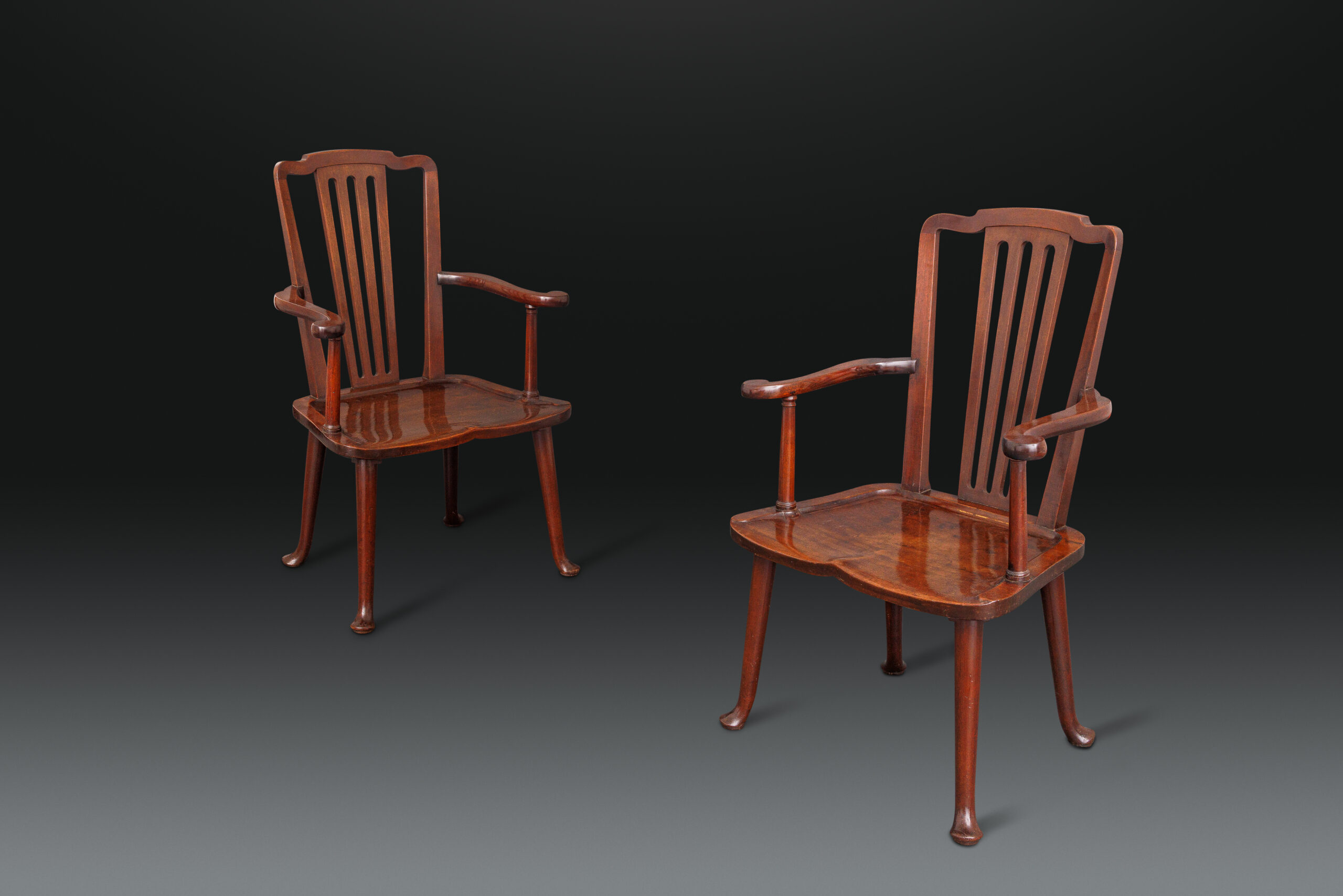
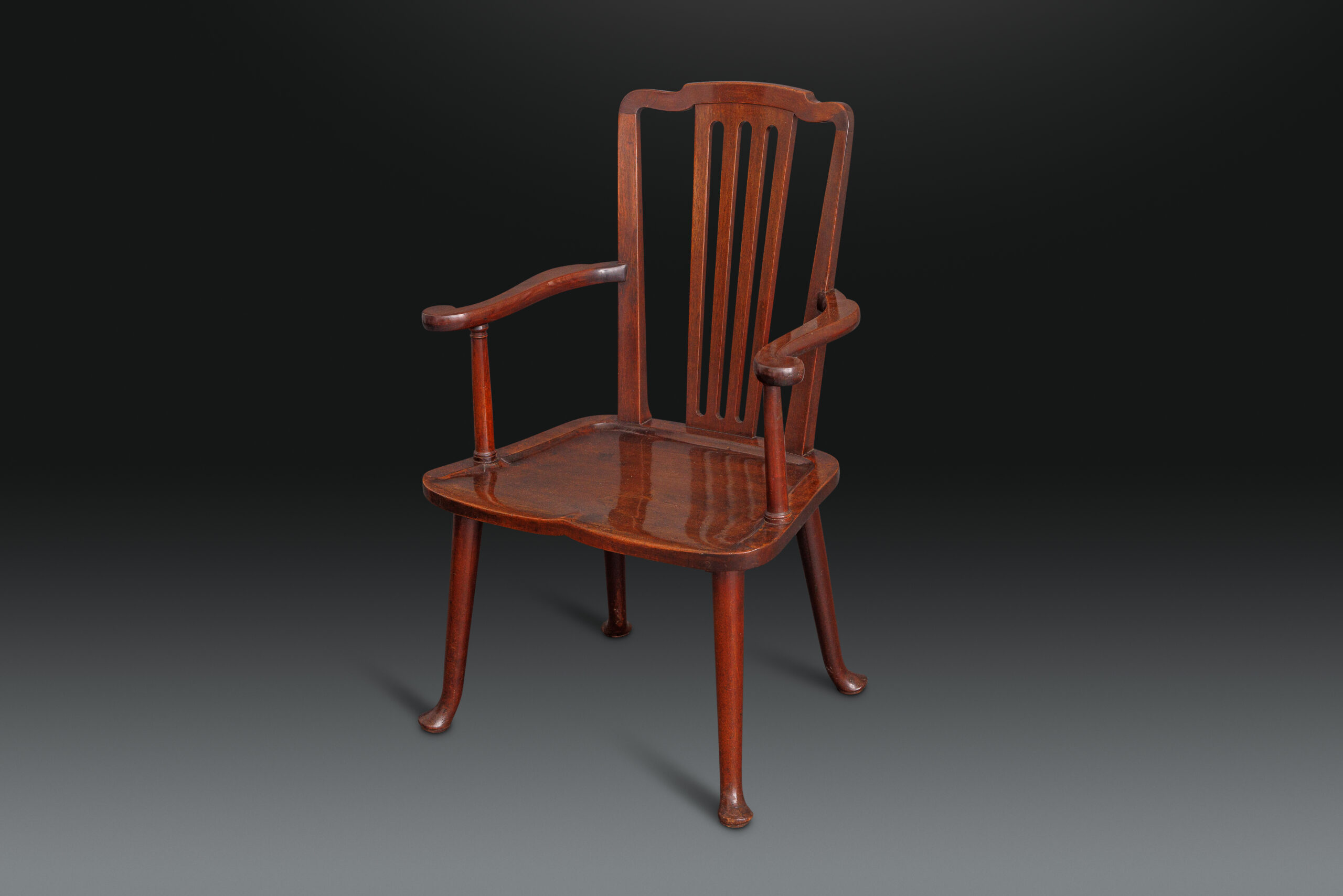
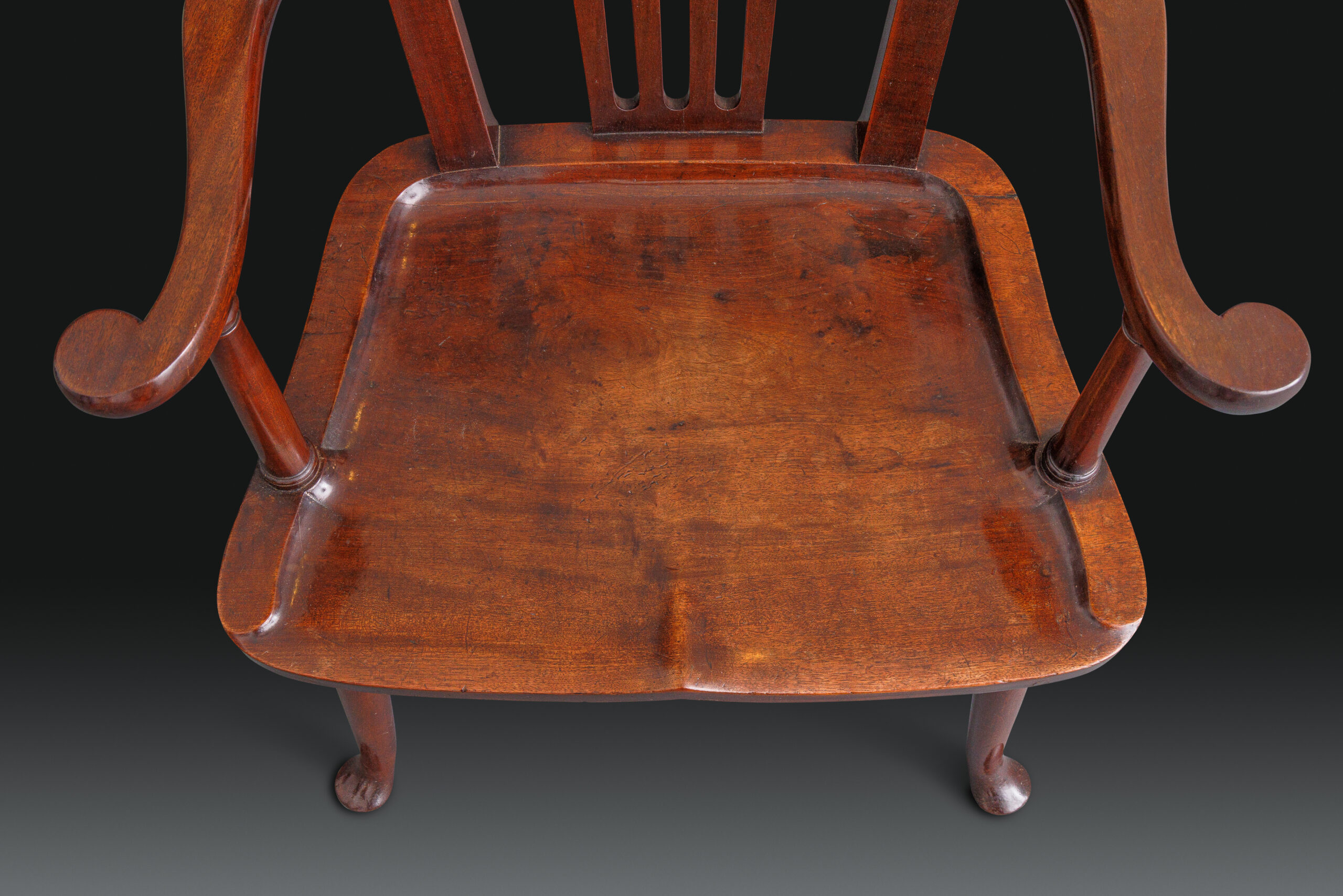
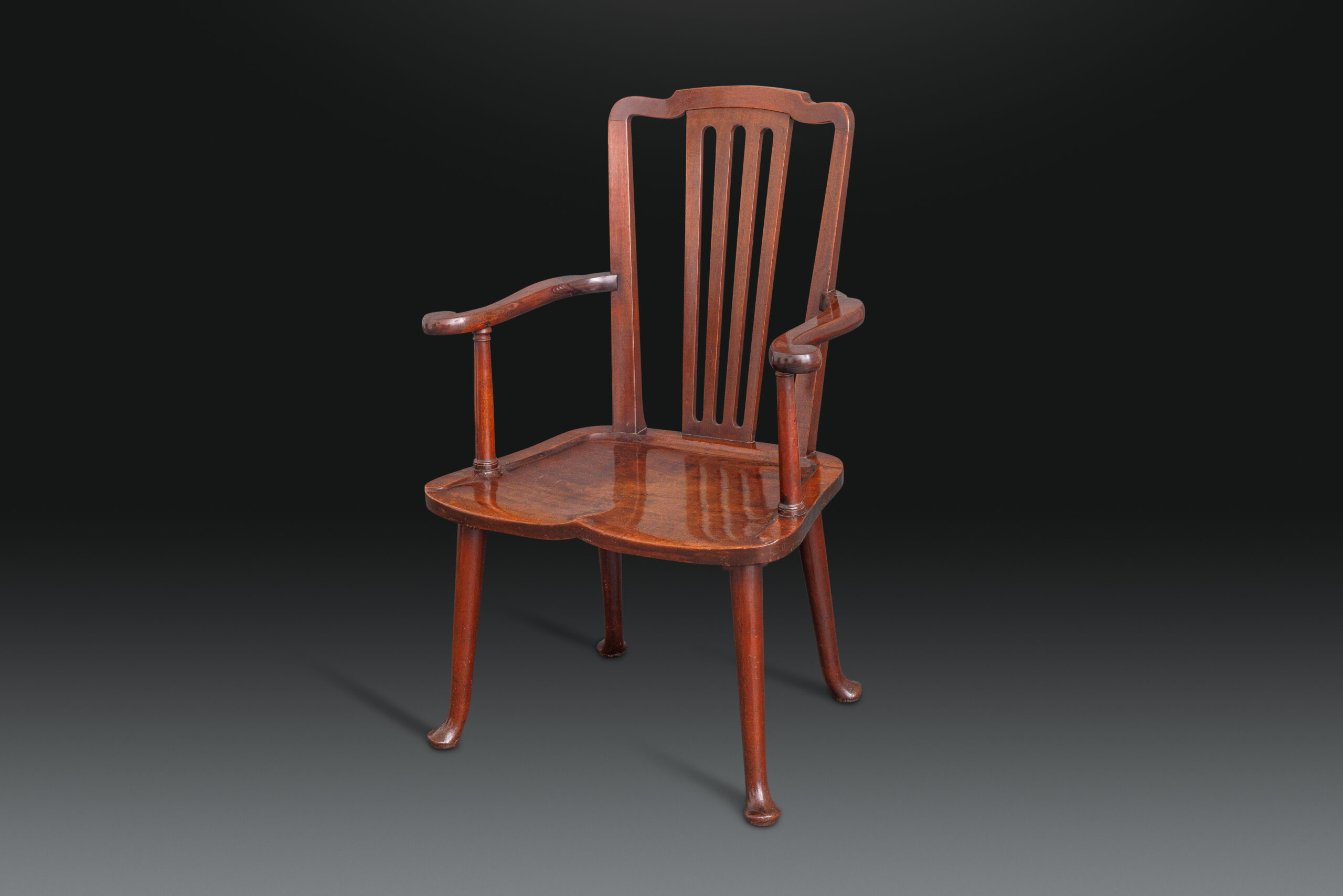
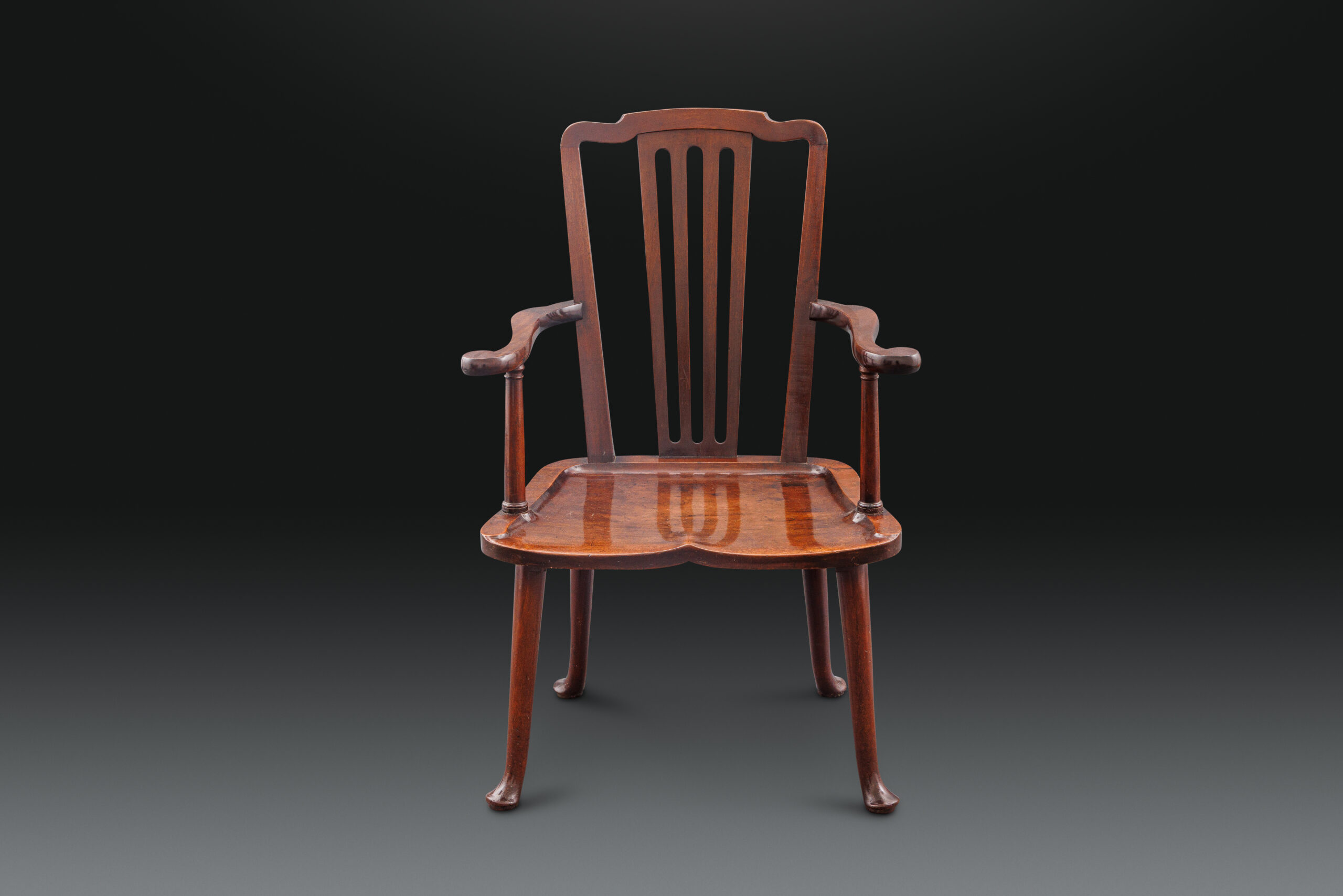
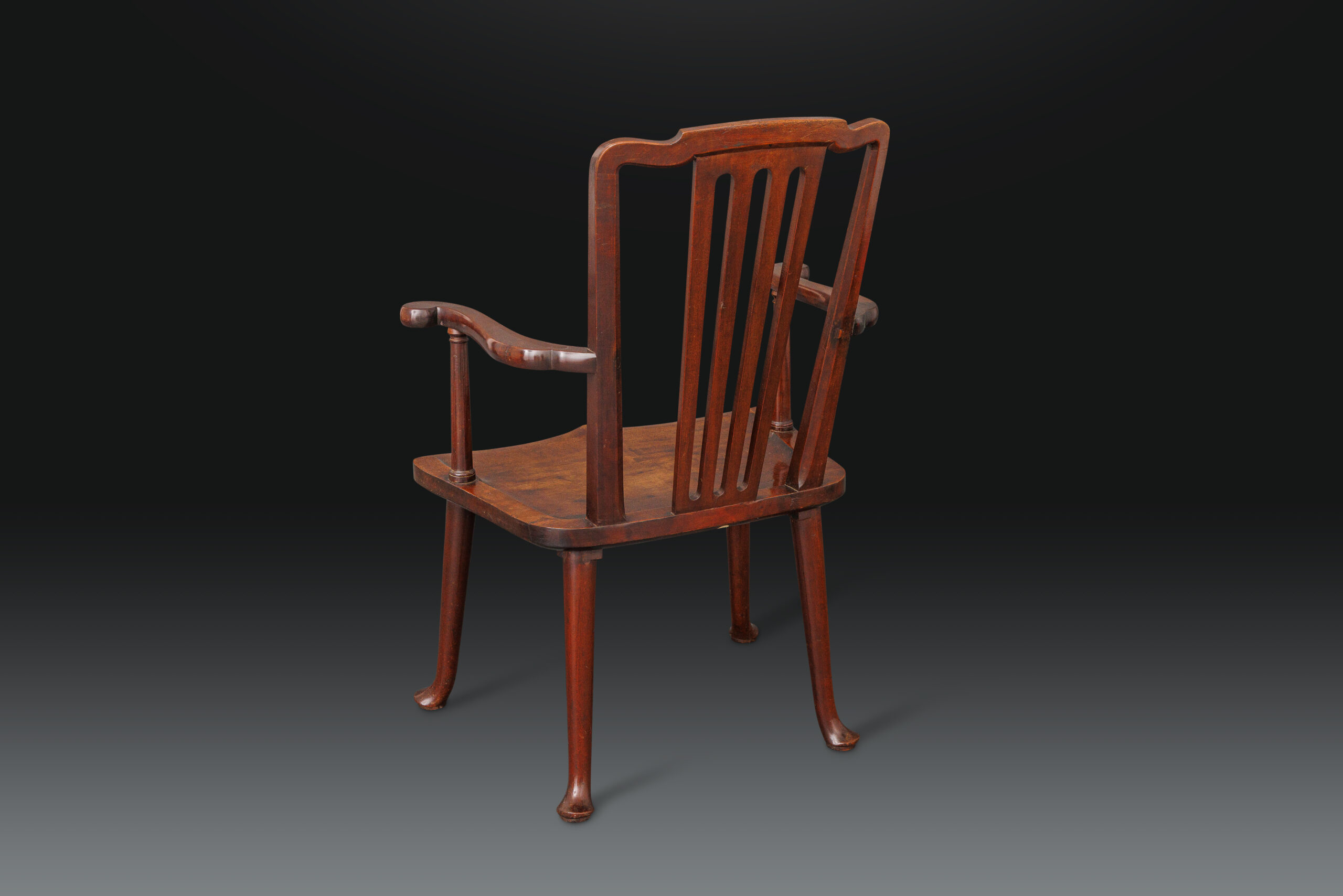
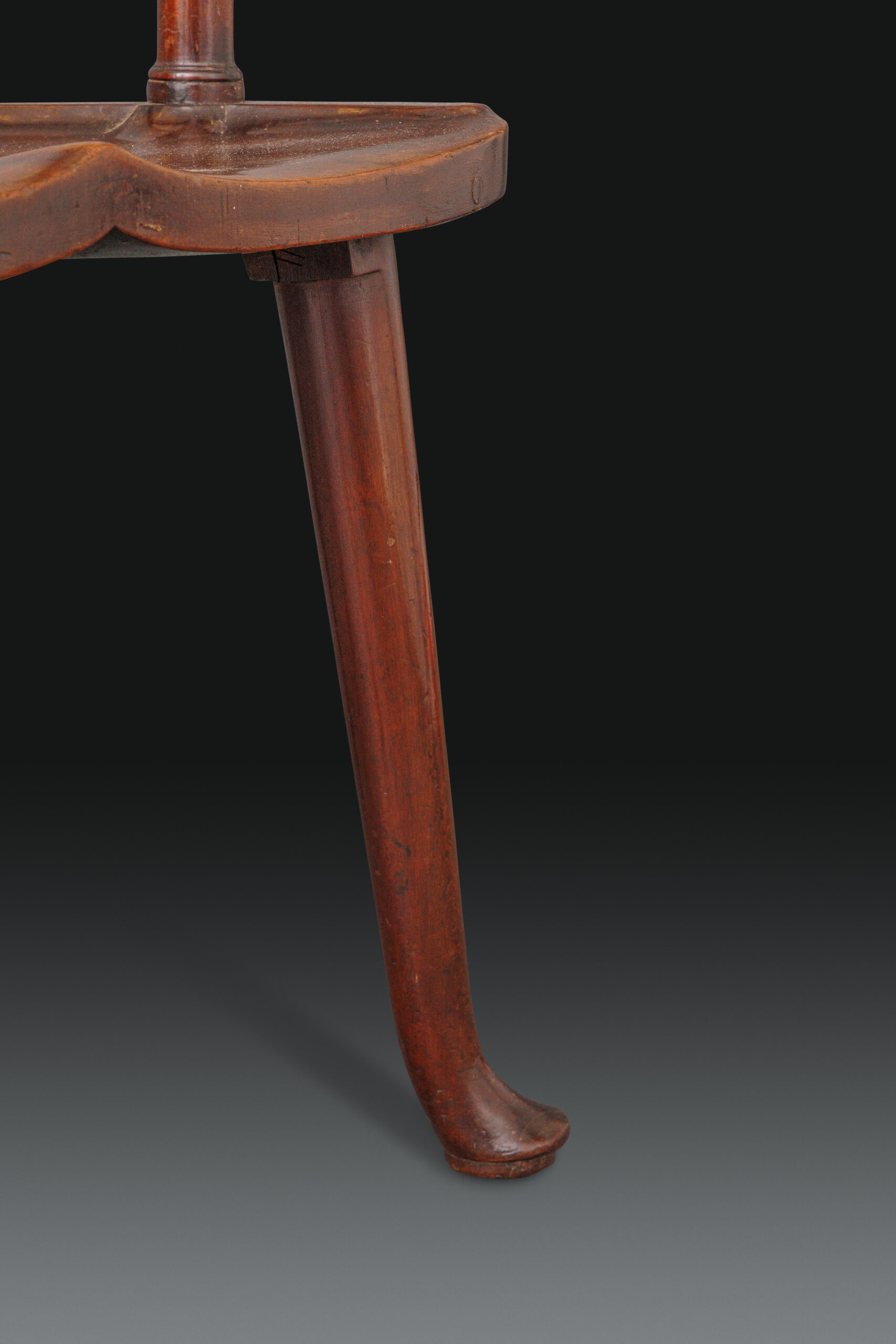
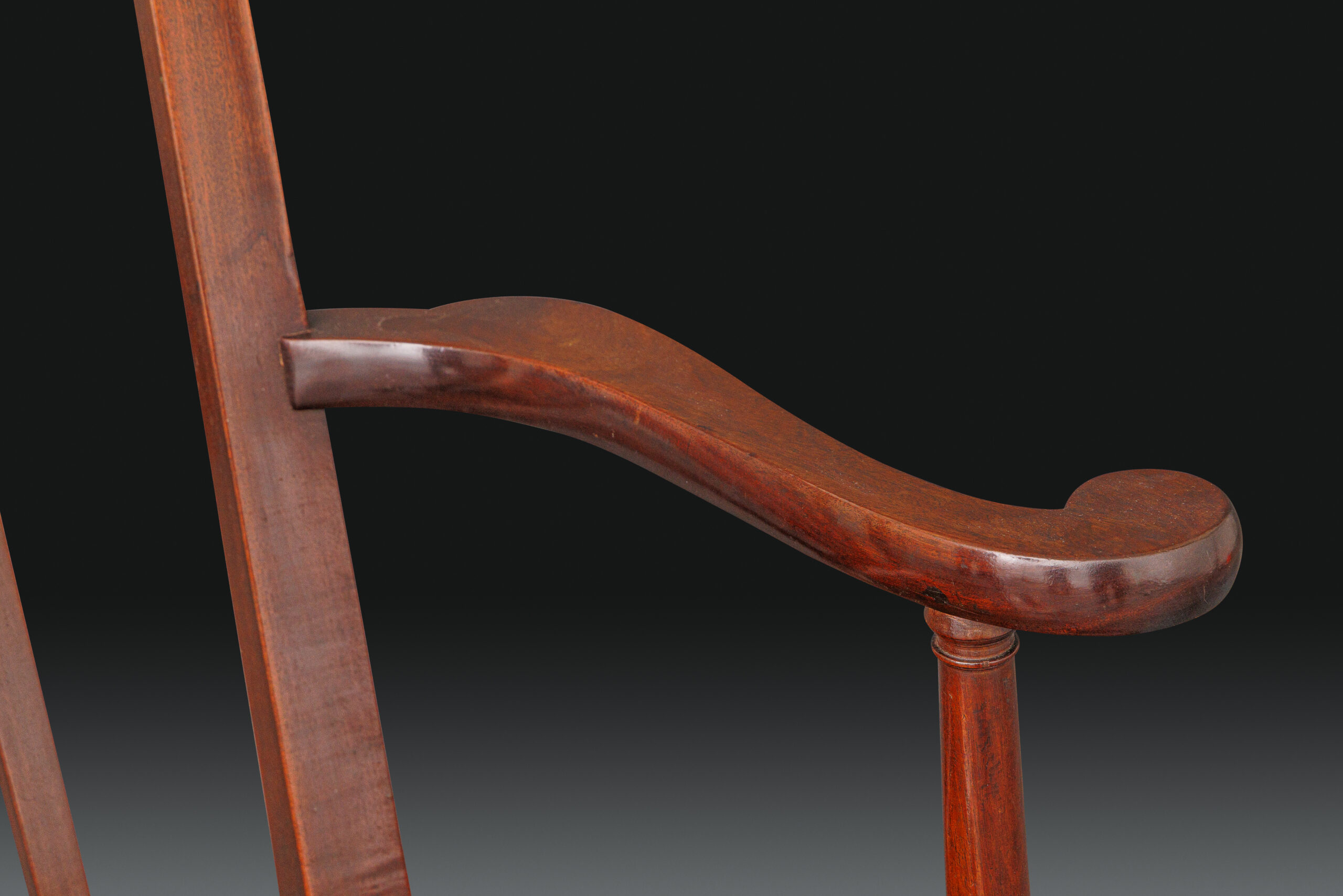
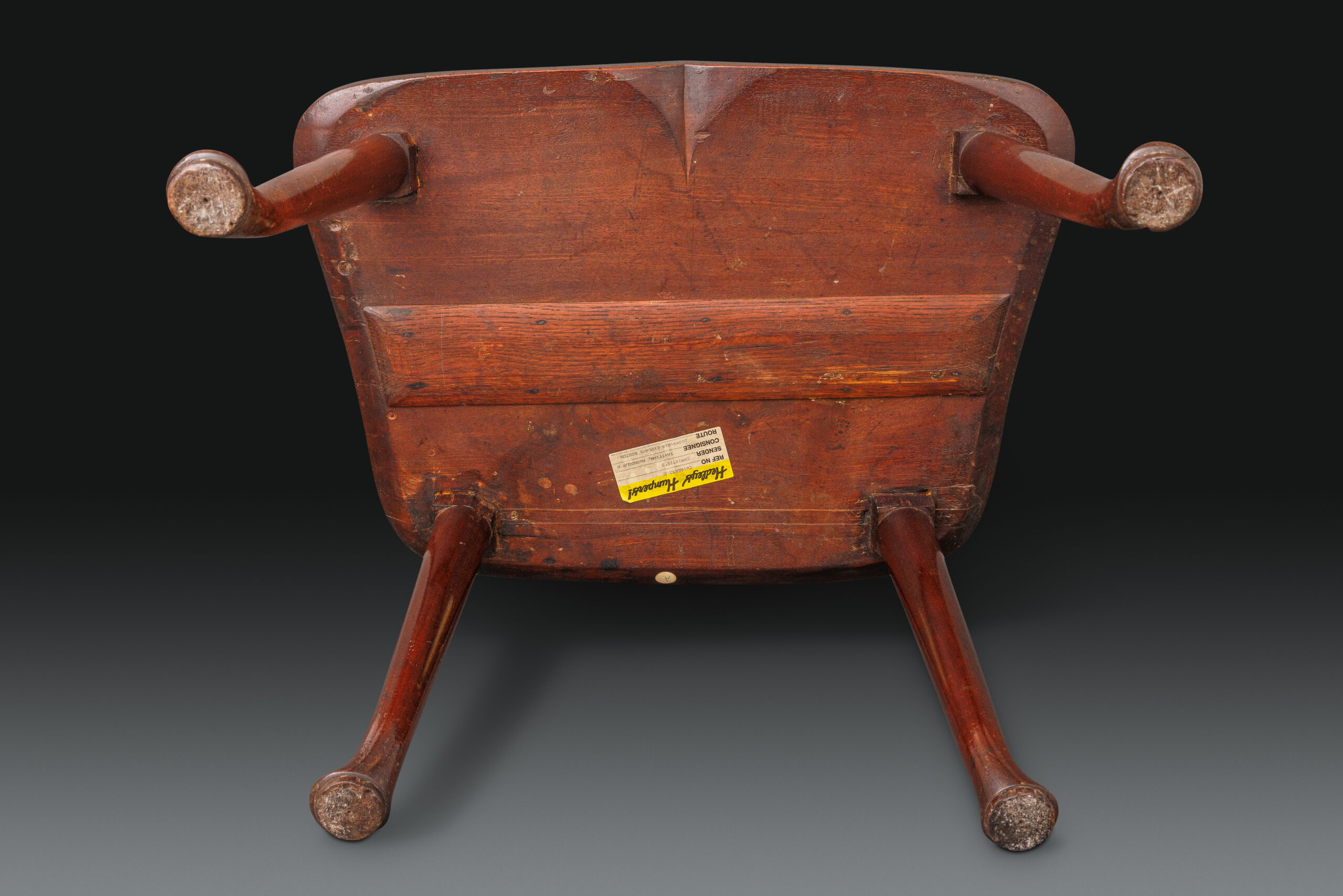
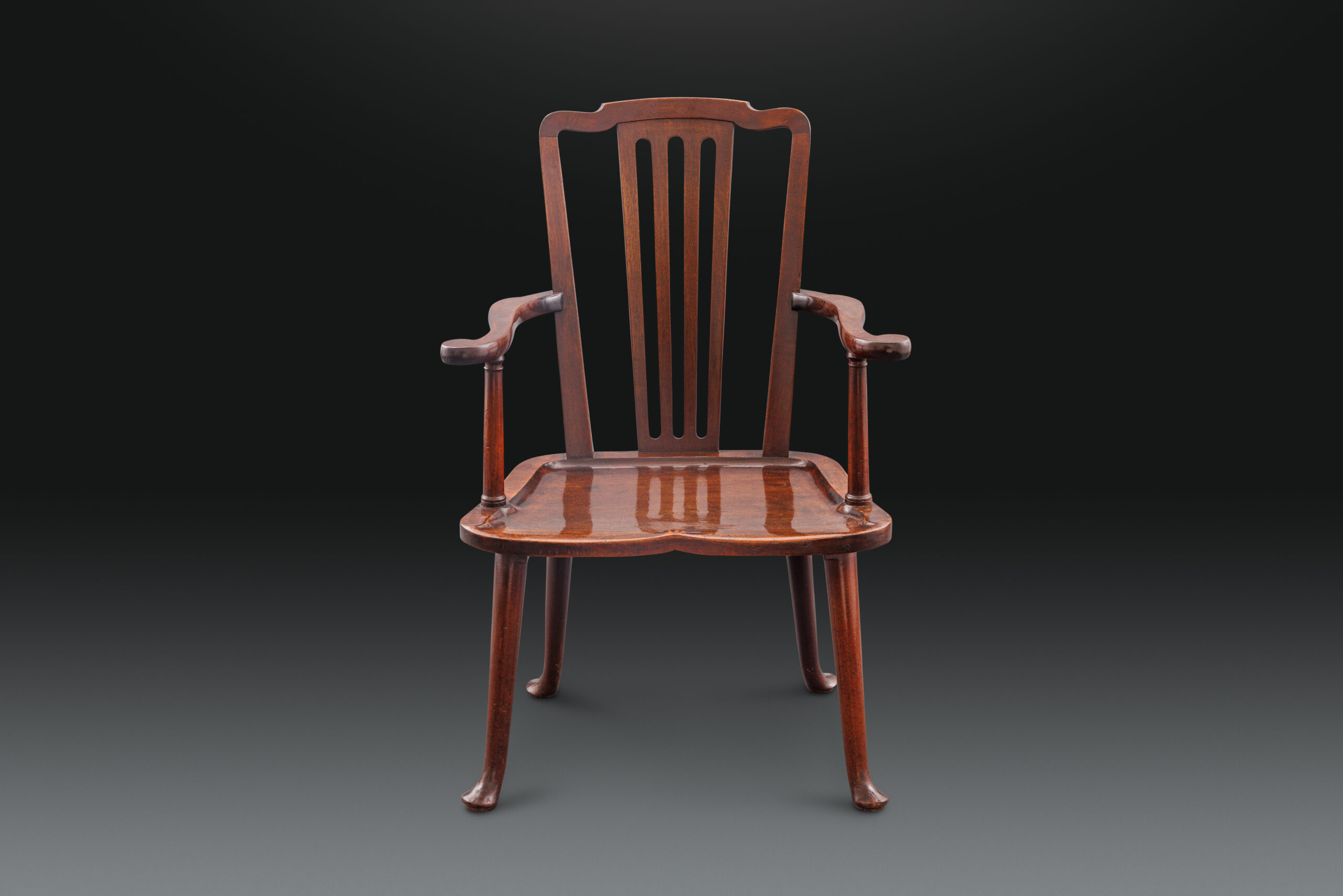
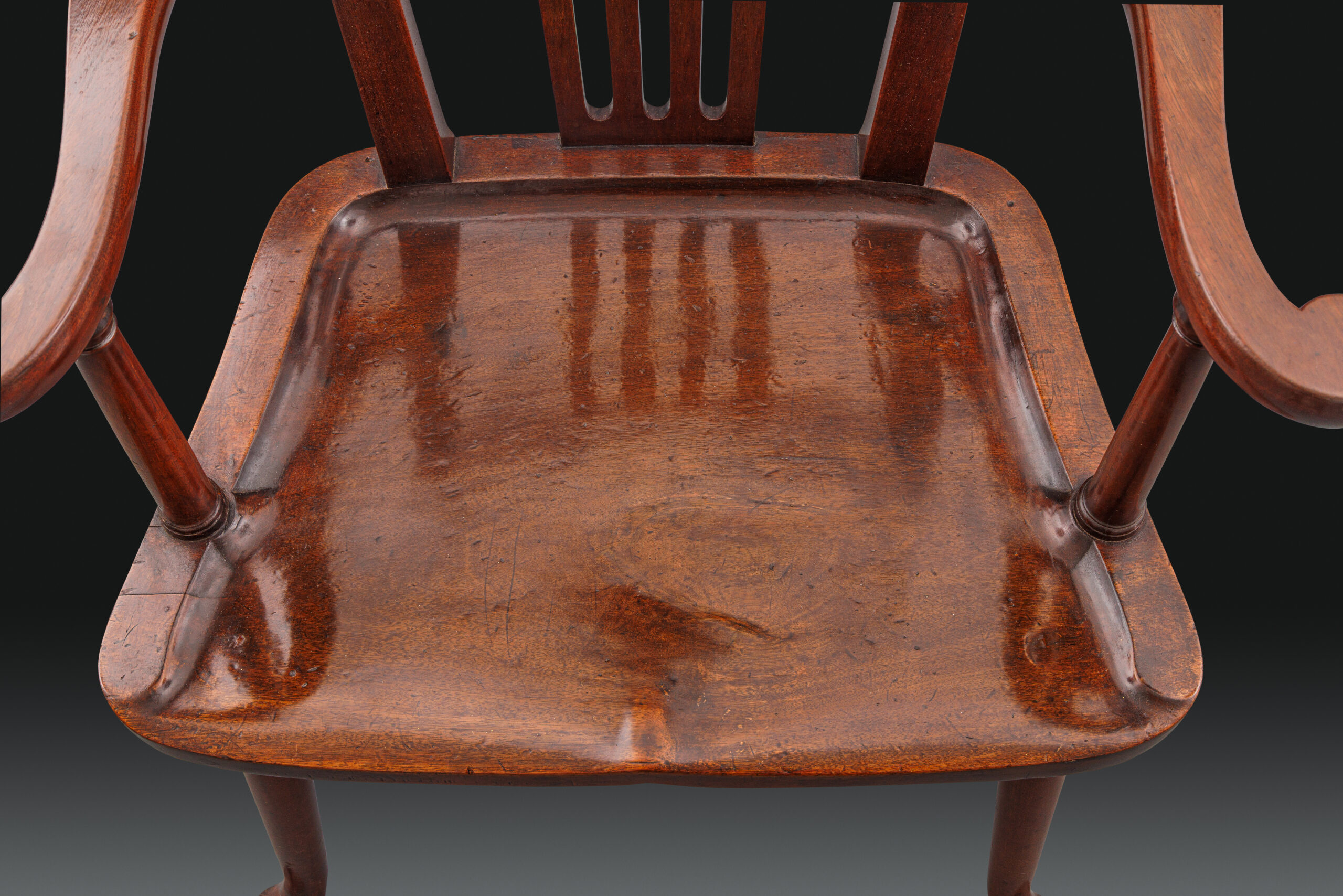
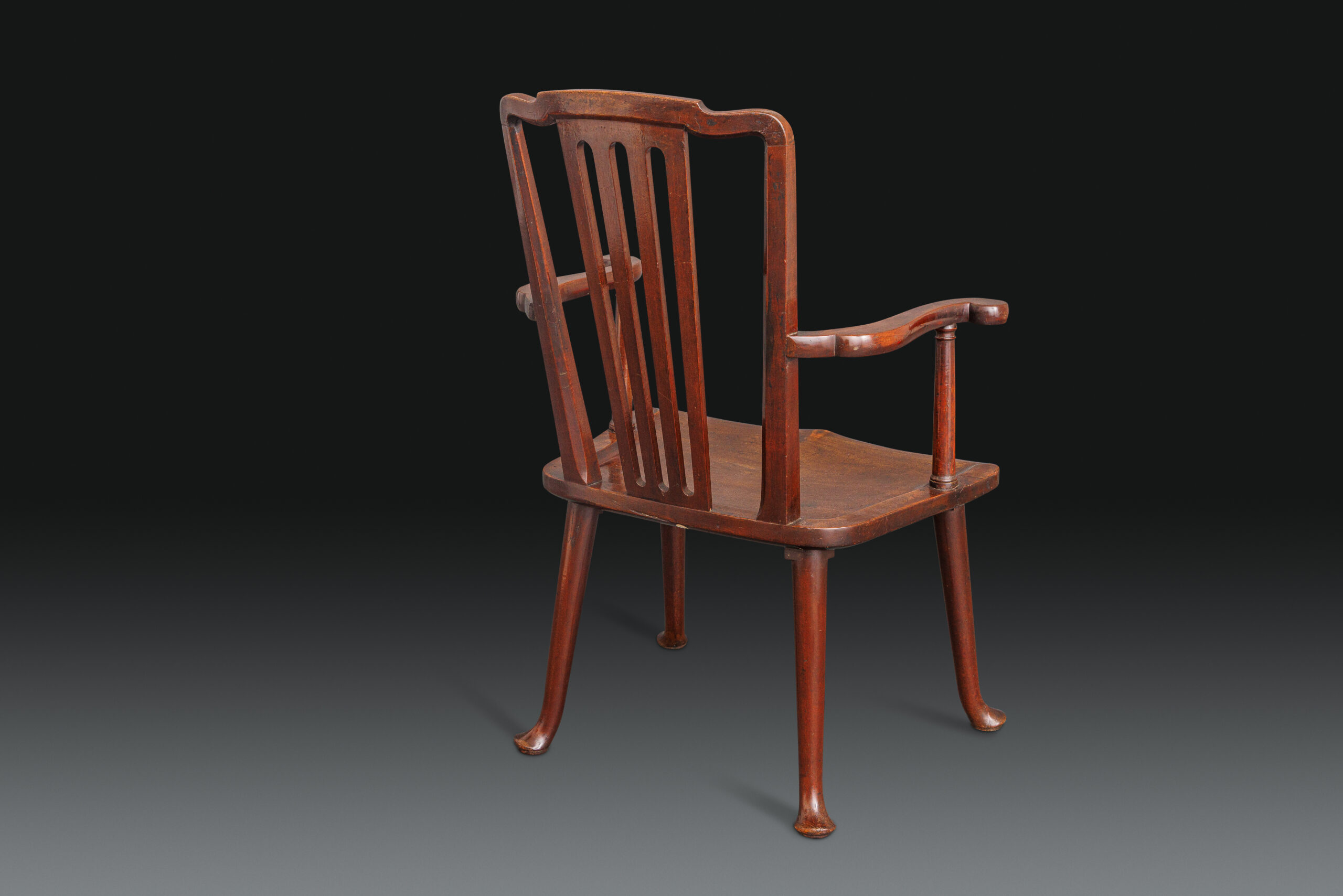
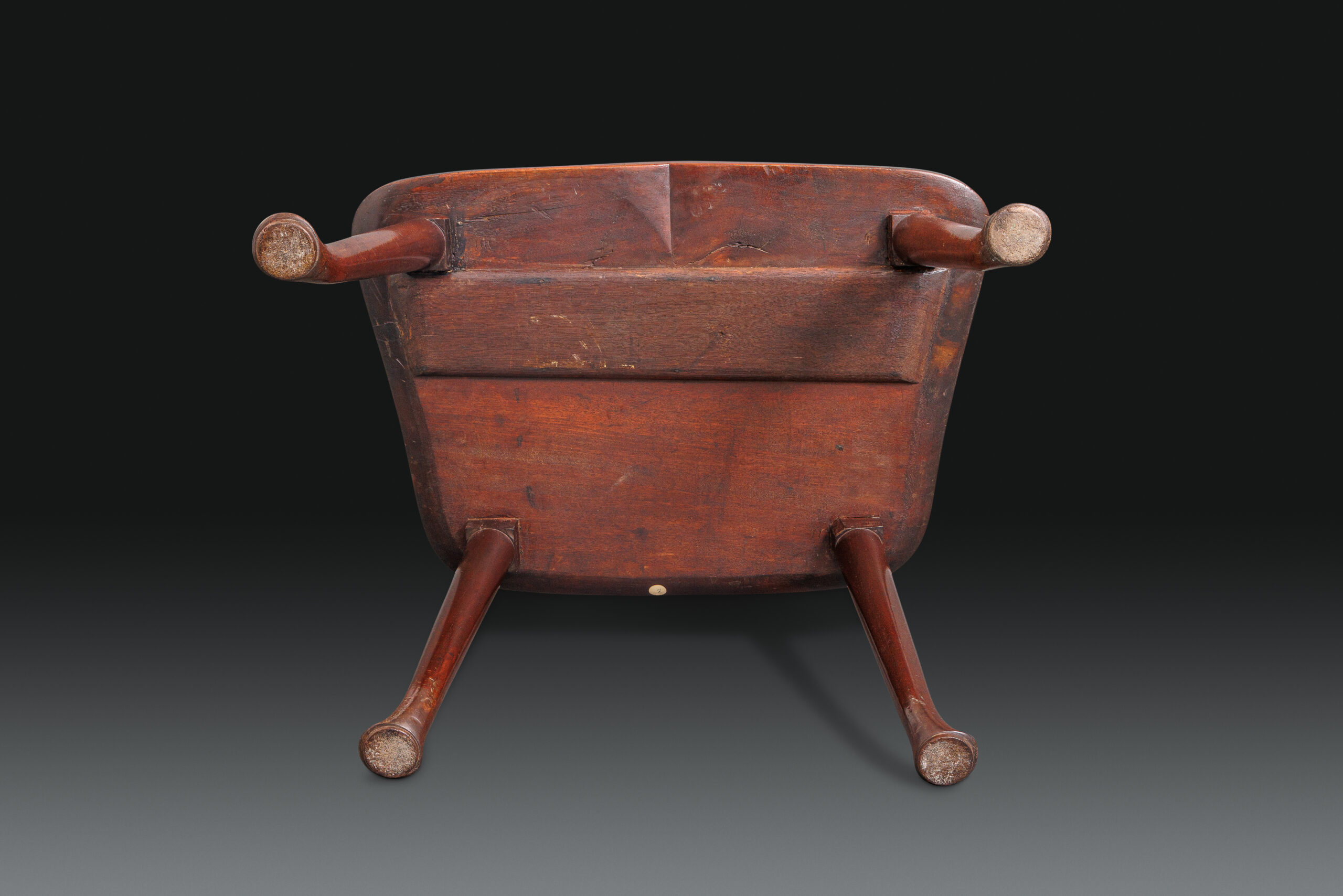
These elegant chairs, dating to c.1750, are clearly influenced by the traditional Windsor chairs being made out of fruitwood and elm at the same period but are an entirely more sophisticated affair. The club legs with pad feet are highly unusual and the chairs stand with a remarkable dignity of form and something of a sculptural feel to them. The back splats are also unusual, featuring as they do vertical fretted decoration rather than spindle turned backs as seen on a typical Windsor chair and, indeed, on the vast majority of surviving mahogany chairs of this sort as well. The timber employed throughout is of the highest quality and the dishing of the saddle seats is also noteworthy, this being a difficult technique and yet applied here with aplomb. The curving arm supports rest on two Tuscan columns which are finely turned and taper from the base to the capitals. The yoke form top rails are another example of a formal furniture influence and these chairs are as likely to have been made by a leading city chair maker as they are to have been made in the country.
The chairs have something of a minimalist and modernist aesthetic to them, a sign of their great design being that they appear to be timeless. As such they would be at home in a contemporary apartment or in a country house environment.
A very closely related chair was in the stock of the London dealer Reindeer Antiques but this chair had additional Tuscan columns, at angles, supporting the back of the arm rests. These columns rather disrupt the fine lines evident on the present chairs.
Apart from the Reindeer example and the example illustrated by Michael Harding-Hill (see literature) we have not been able to find any other surviving chairs in closely related patterns. Mahogany hall chairs based on Windsor chair patterns survive in many important stately home and private collections. A fine chair made some 10 years later than ours is in the collection of the V&A. This chair is said to have belonged to the poet William Cowper (https://collections.vam.ac.uk/item/O372196/cowpers-arm-chair-windsor-armchair-unknown/), Mahogany Windsor-type chairs of shorter tub-like proportions survive at Blickling Hall (https://www.nationaltrustcollections.org.uk/object/354258.1), and Ham House (https://www.nationaltrustcollections.org.uk/object/1139708.5) further proof that such chairs were acquired for the most important interiors of the time. These chairs are again somewhat later in date than ours.
Related splat form chairs were also made for Rousham in Oxfordshire and Hartwell House, also in the same county.
In terms of private collections, mahogany chairs of somewhat related designs to ours but invariably with the more common spindle backs have been in the important private collections formed by Benjamin Sonnenberg, Peggy and David Rockefeller and, in England, Professor Sir Albert Richardson, further underlining the desirability of such pieces.
Our chairs are very rare survivors and represent the perfect blend of form and function.
England, circa 1750.


