

Comparative Literature:
John Roland Abbey Life in England in Aquatint and Lithography 1770-1860 from the Library of J. R. Abbey, cat. no. 472.
Catherine Scheybeyler The Exotic and the Beautiful: The World in Colour Volume IV-The Collection of Colour Plate Books from the Library of Norman R Bobins, cat. no. 1294.
Erriki Huhtamo Illusions in Motion: Media Archaeology of the Moving Panorama and Related Spectacles, cat. nos. 50 and 60
Ernest R. Gee Sporting Panoramas cat. no. 1.
Gabriel-René Mennessier de La Lance Essai de bibliographie hippique : donnant la description détaillée des ouvrages publiés ou traduits en latin et en français sur le cheval et la cavalerie, avec de nombreuses biographies d’auteurs hippiques / par le général Mennessier de La Lance Vol 1. cat. no. 15.
Description:
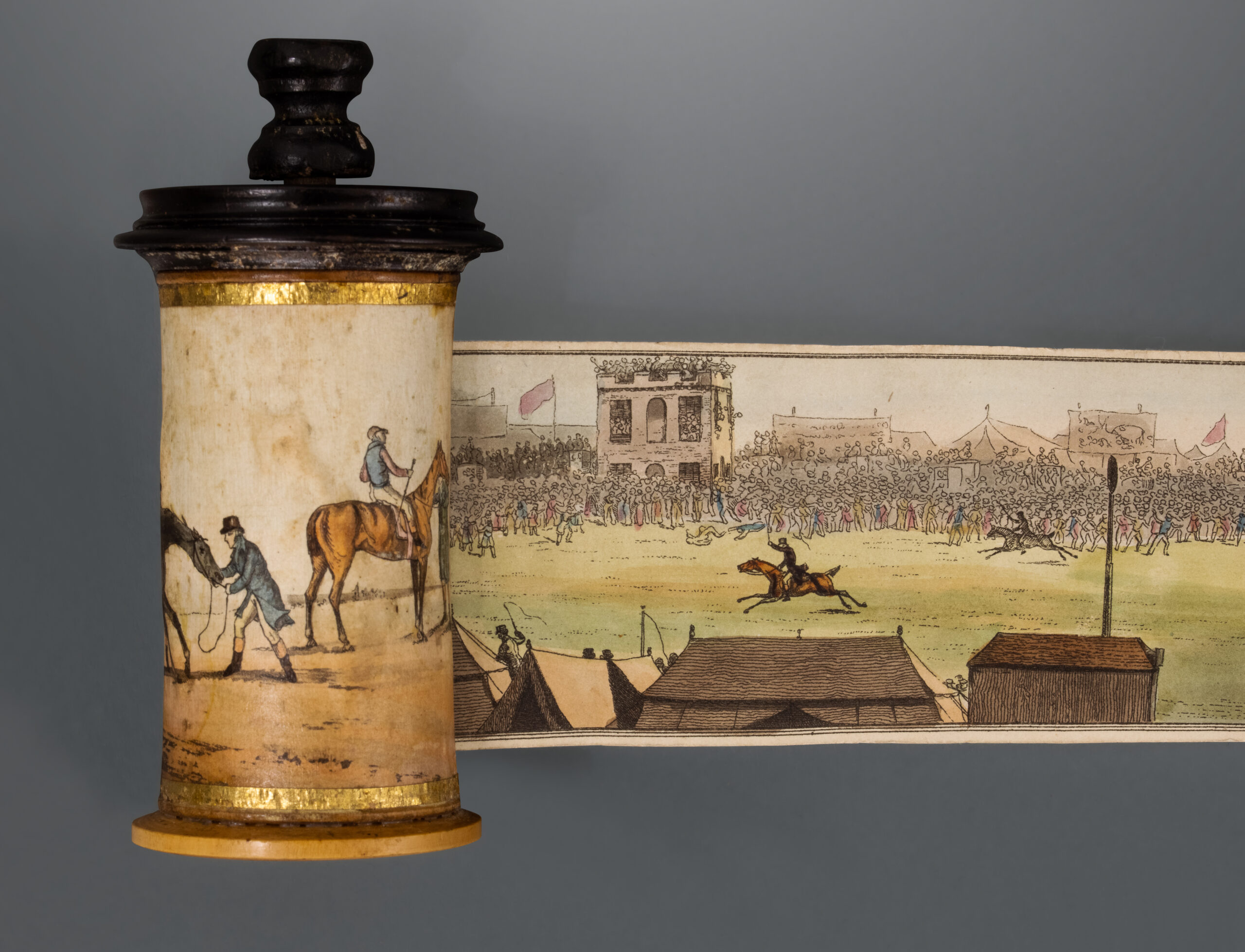
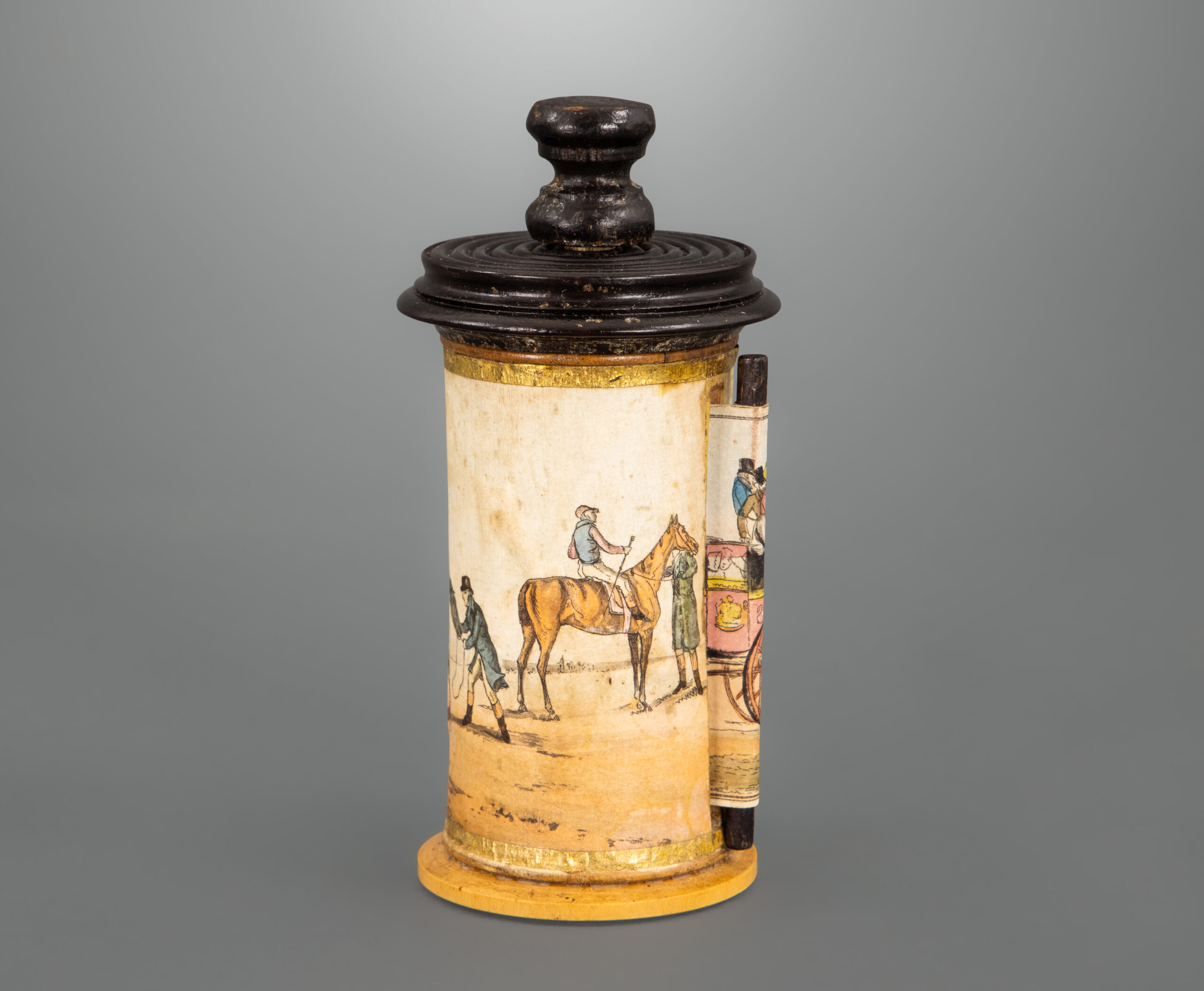
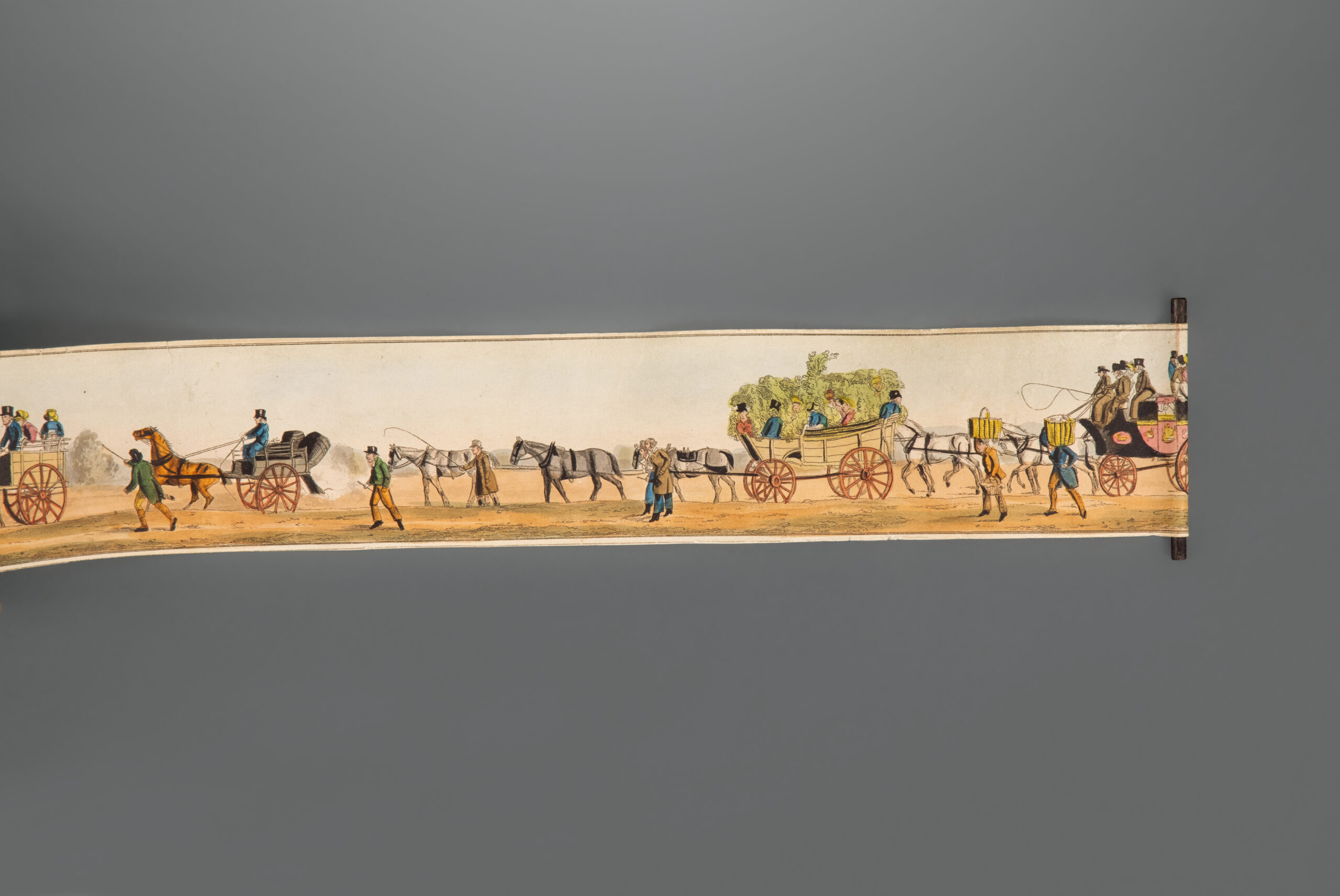
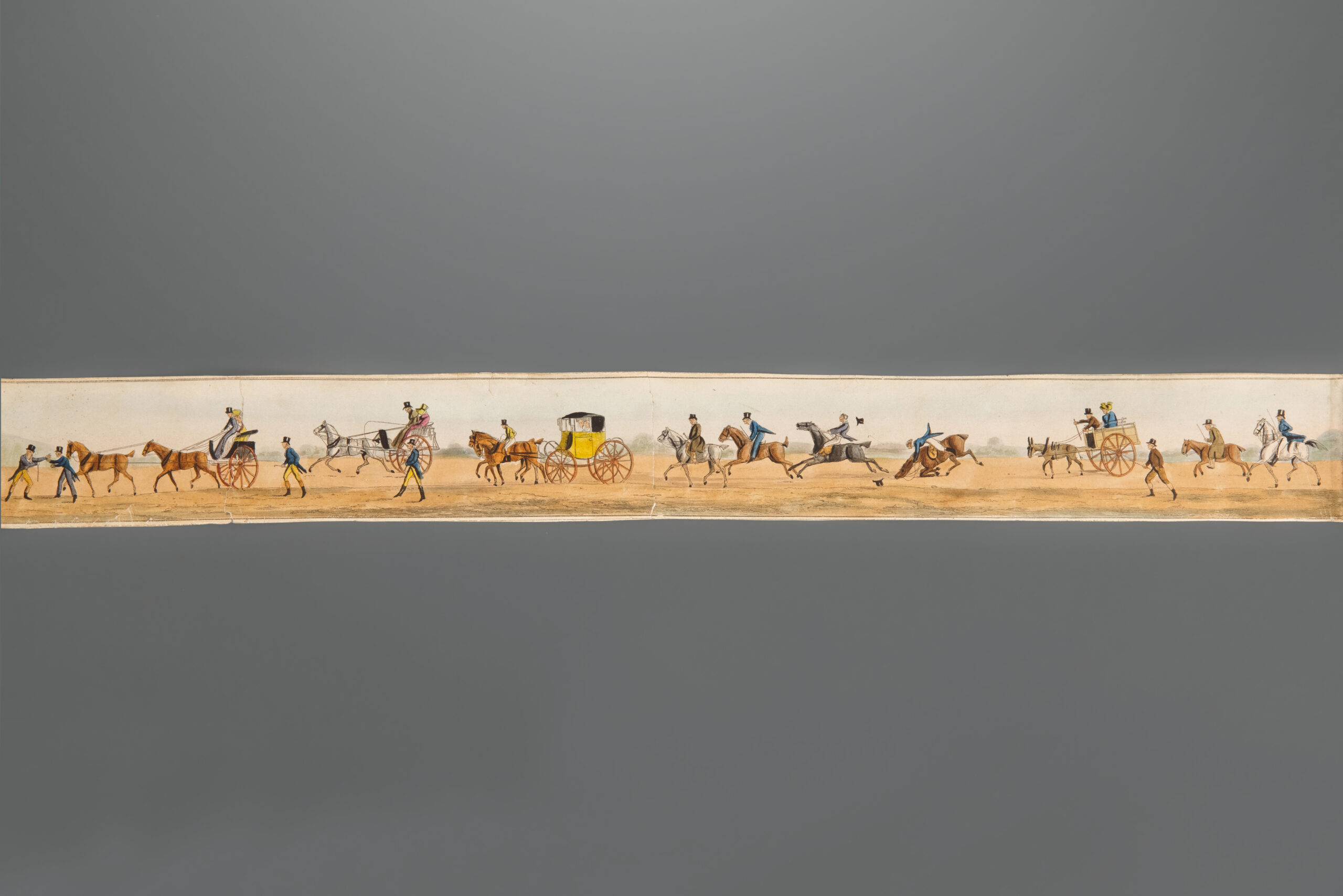
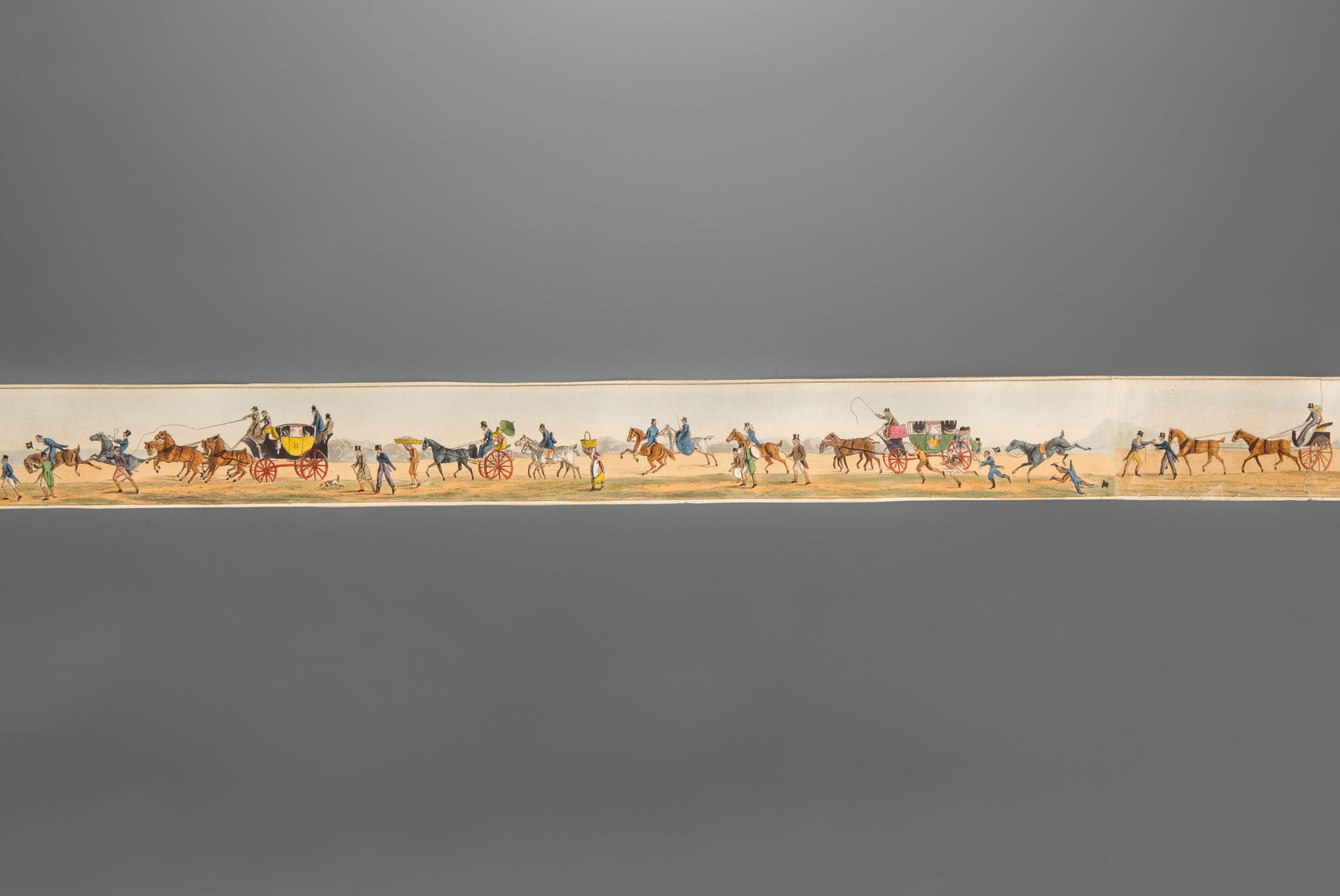
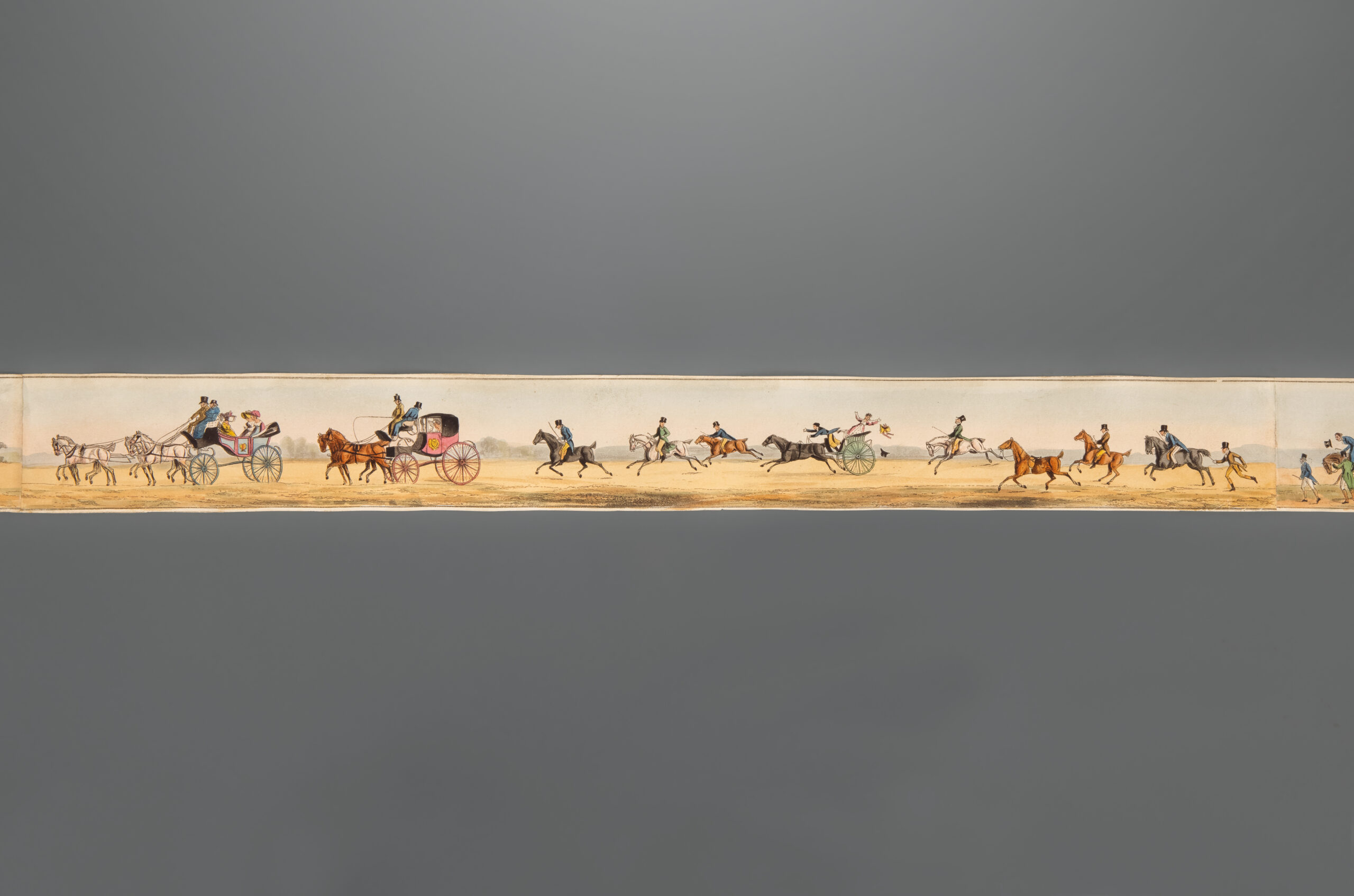
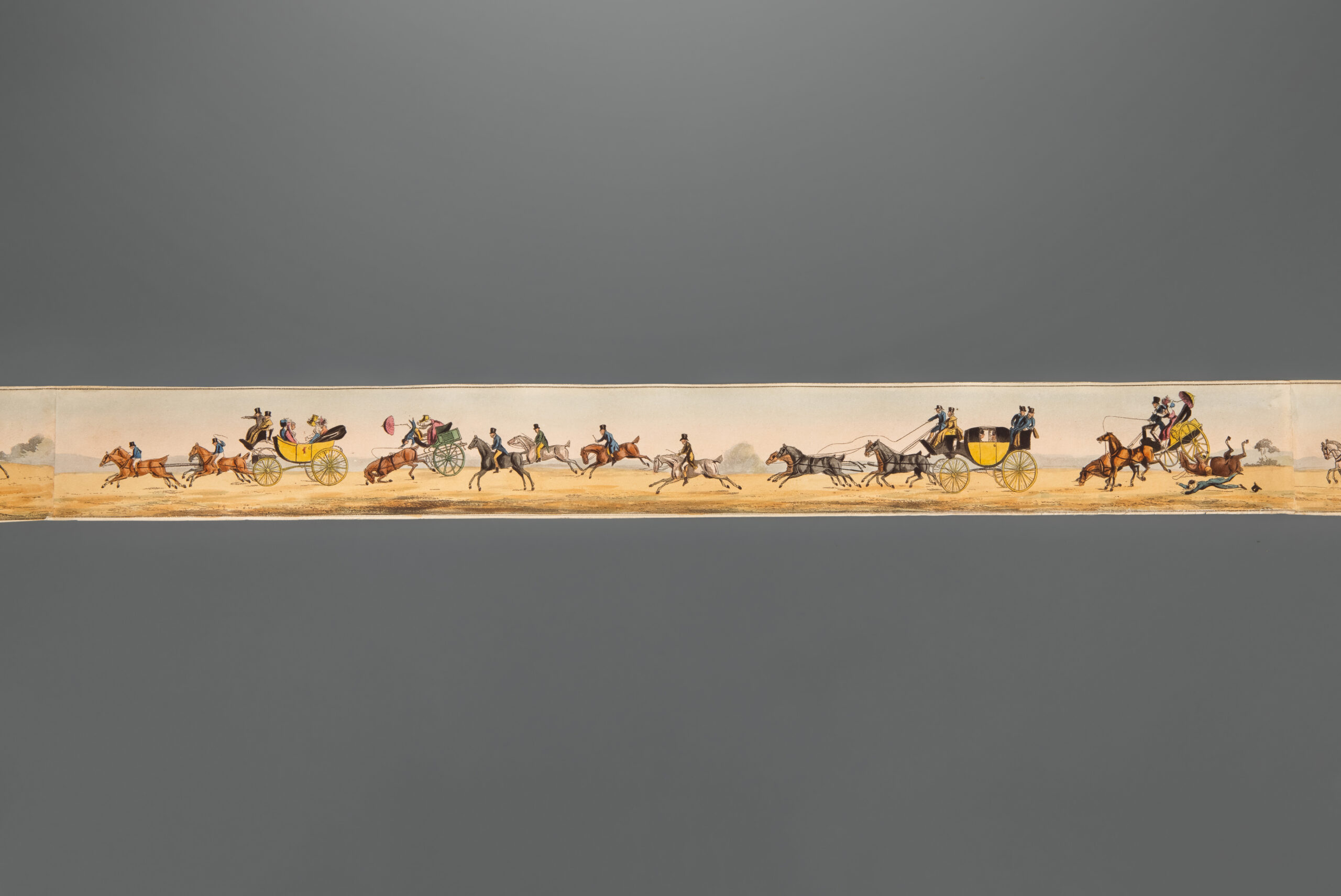
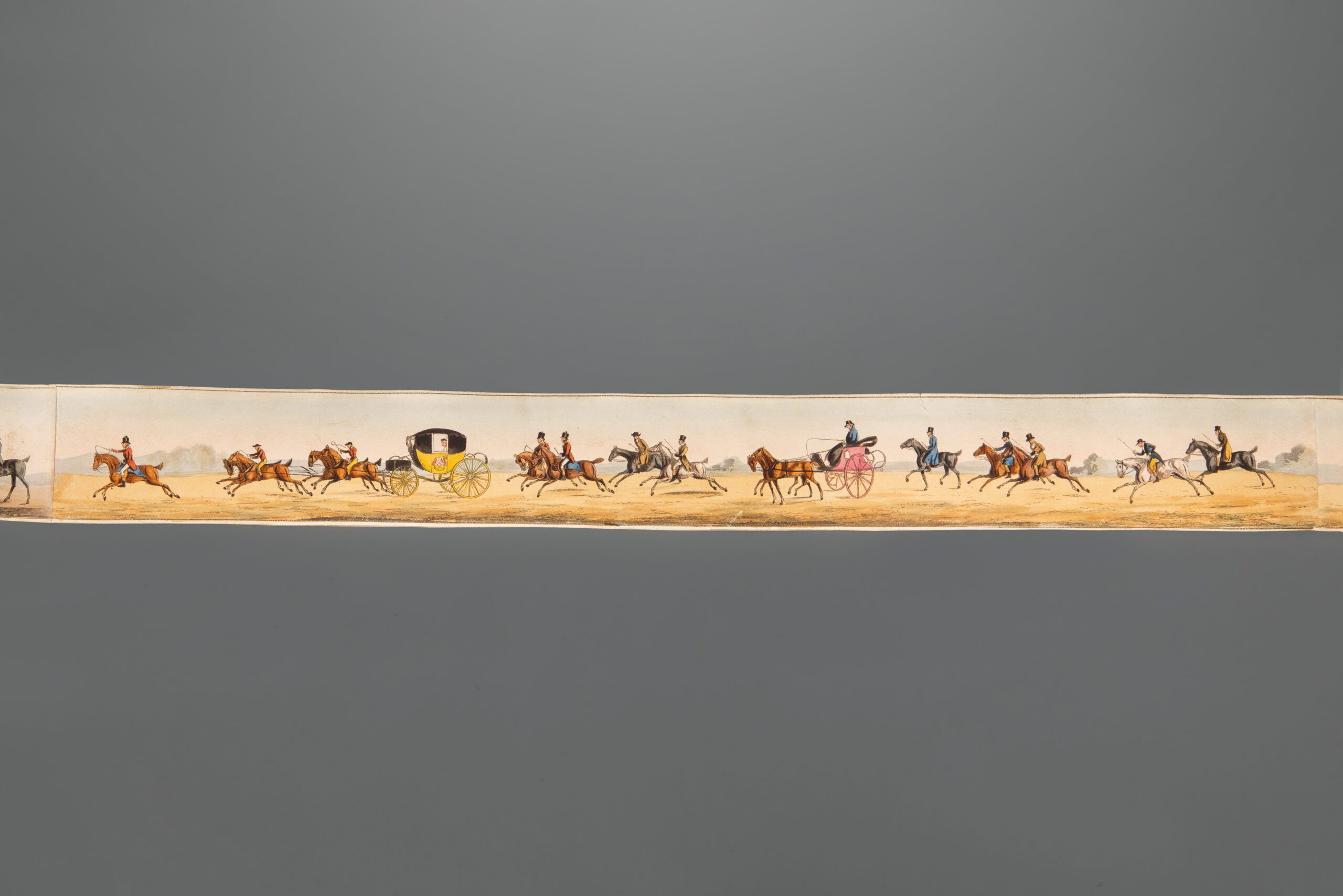
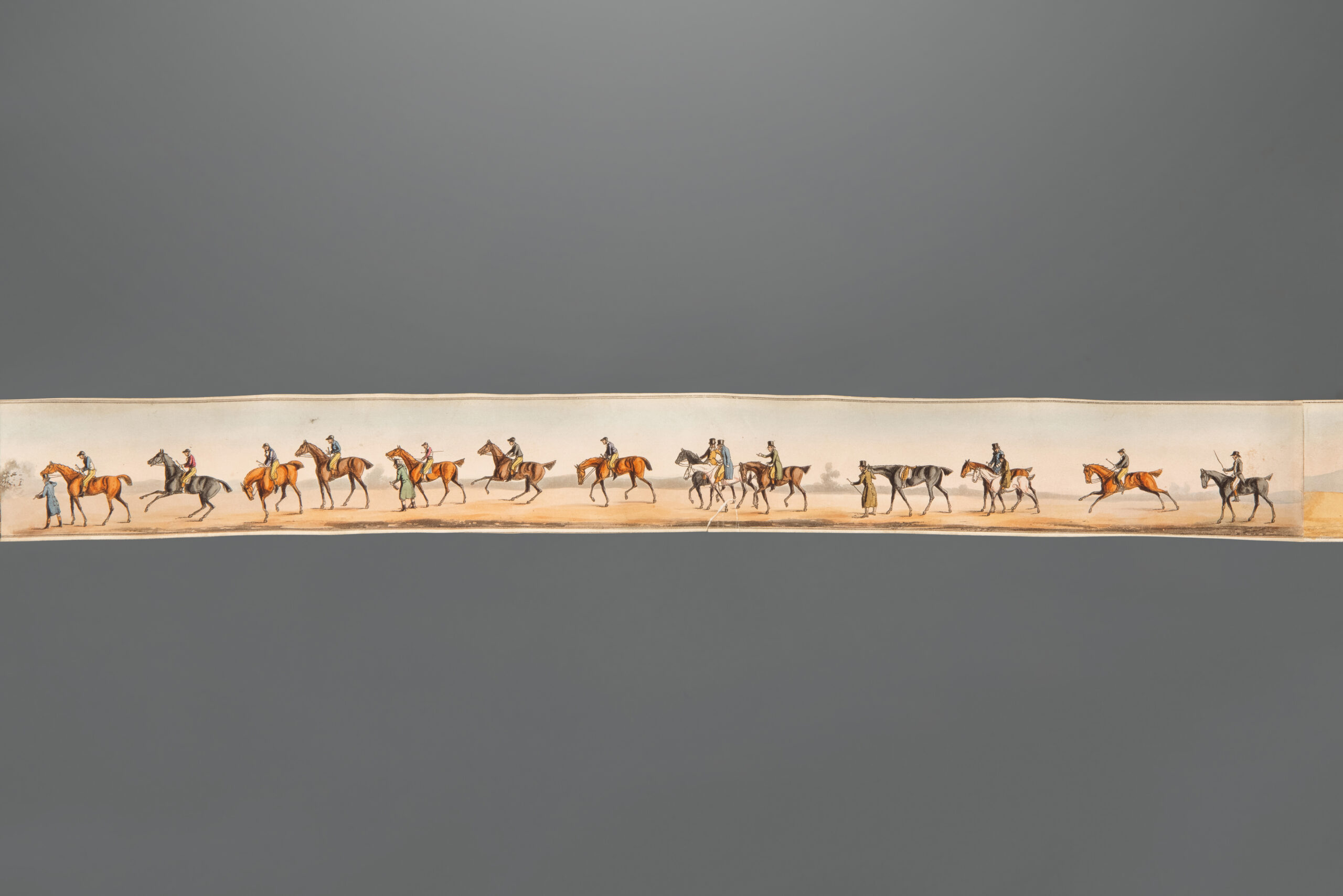
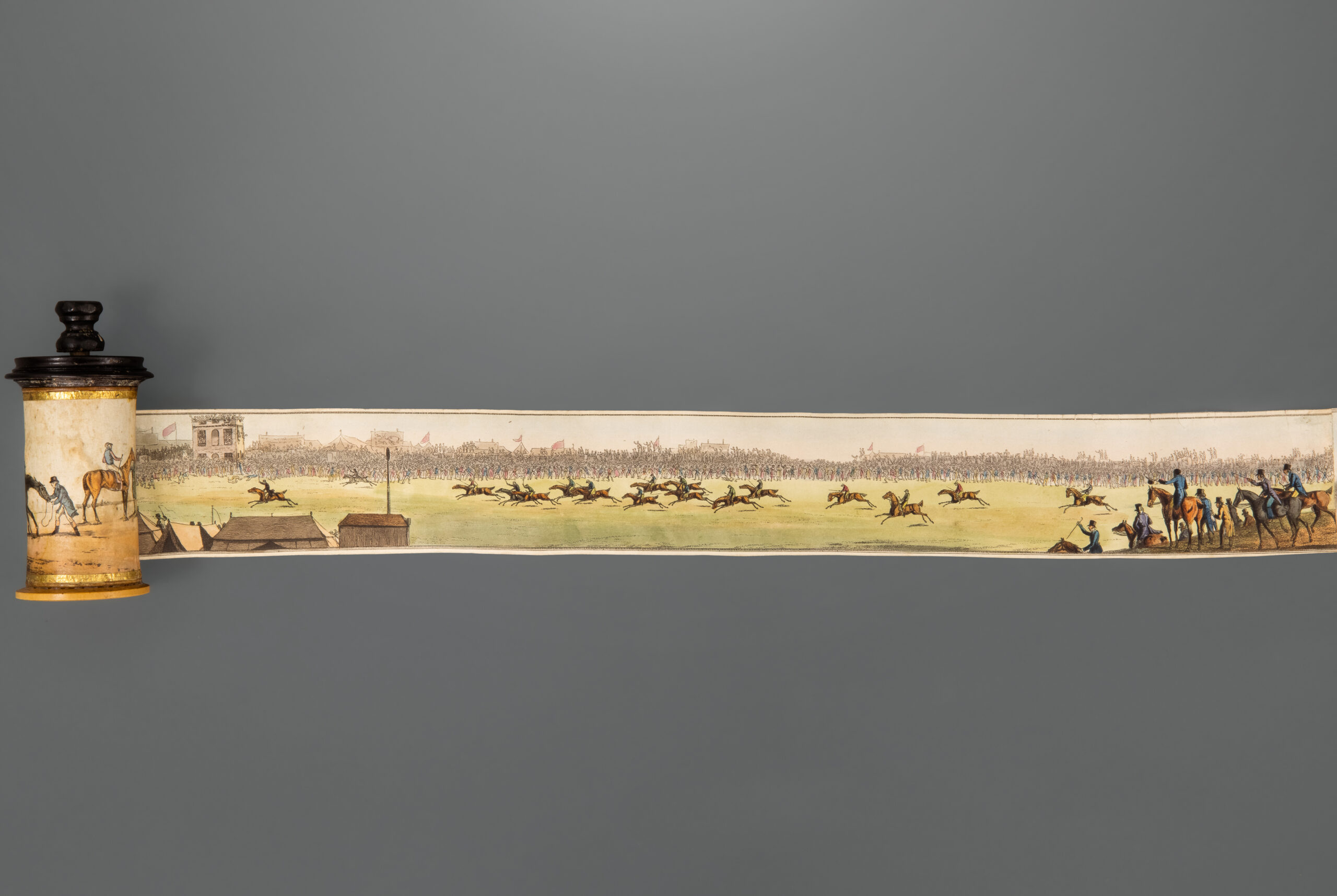
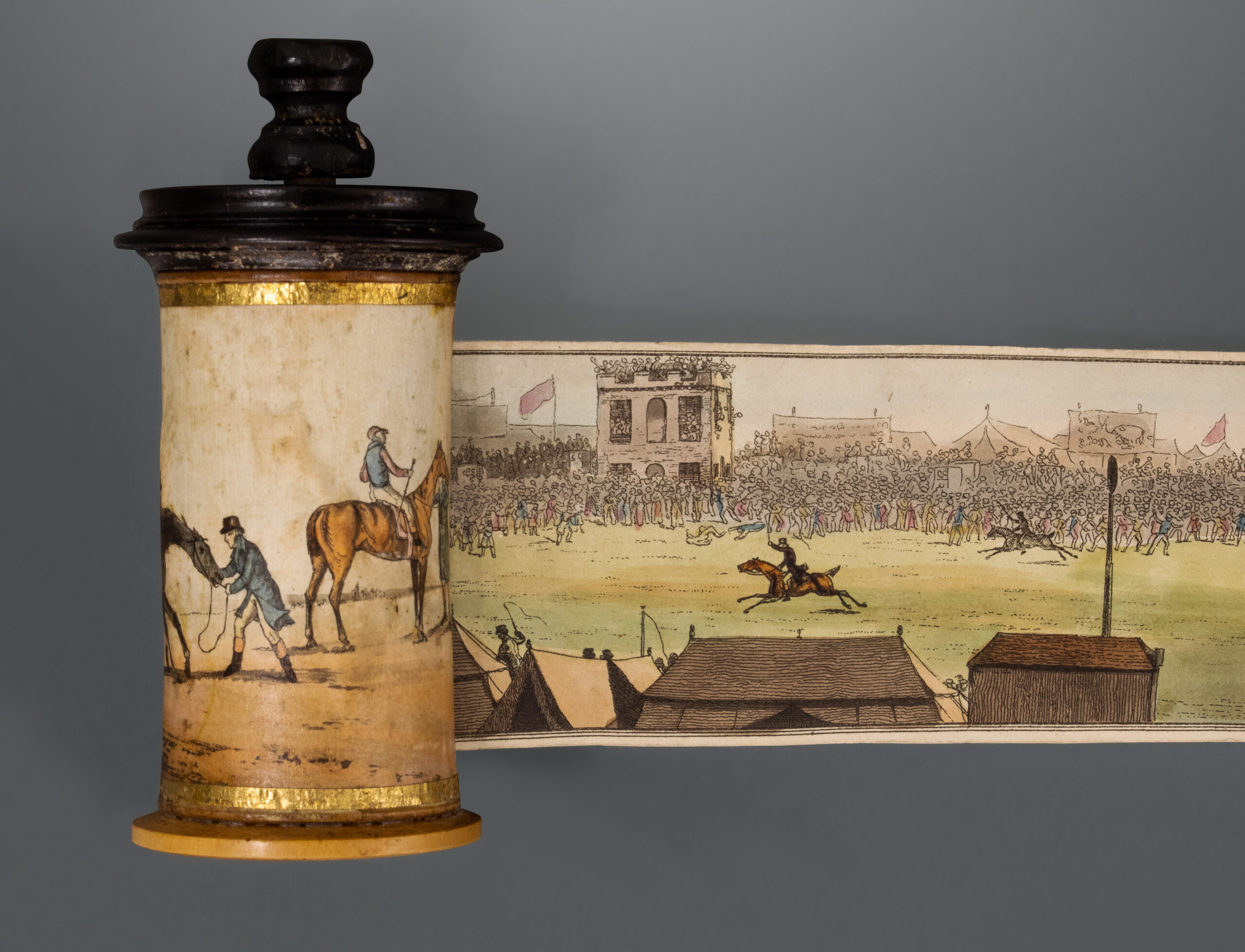
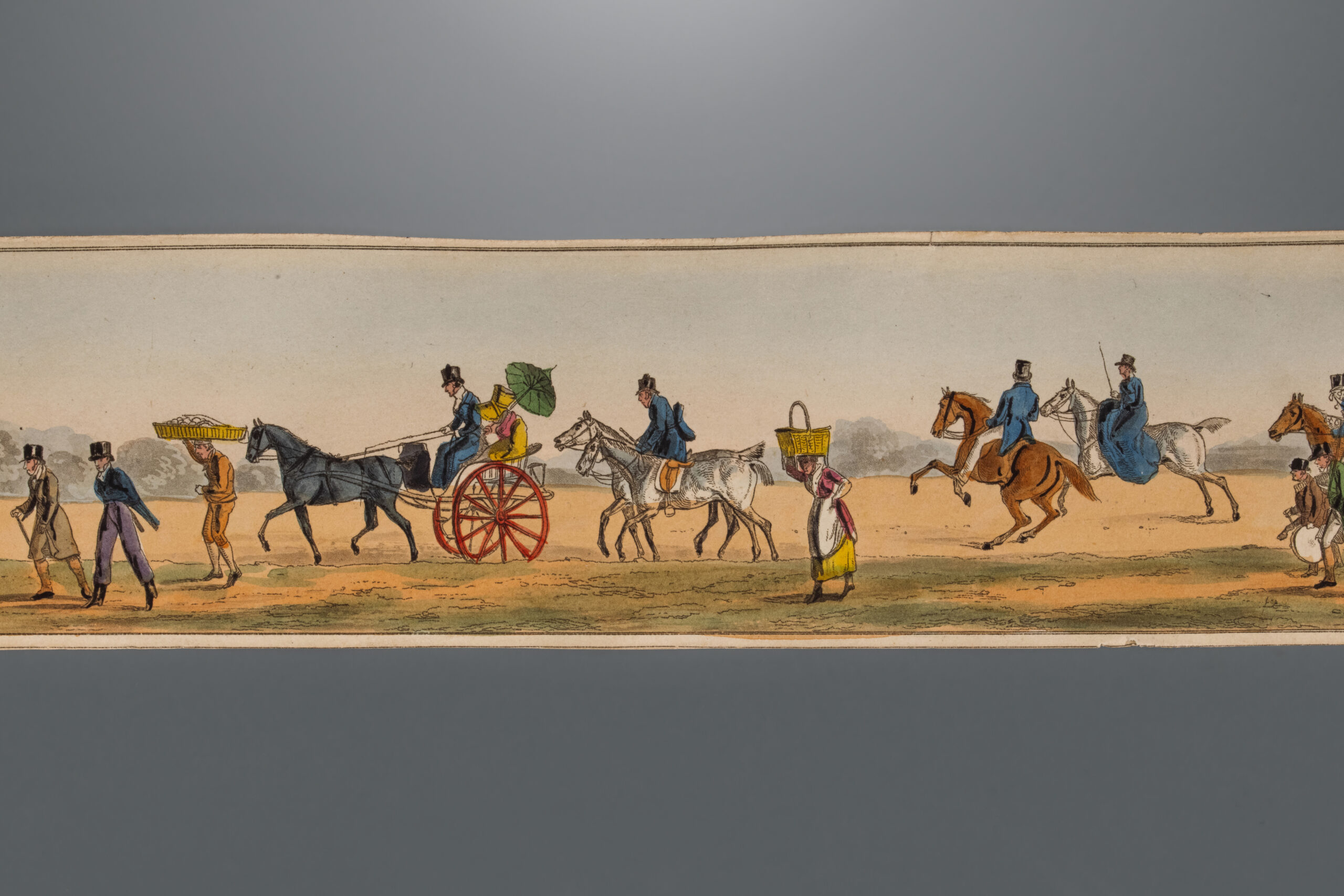
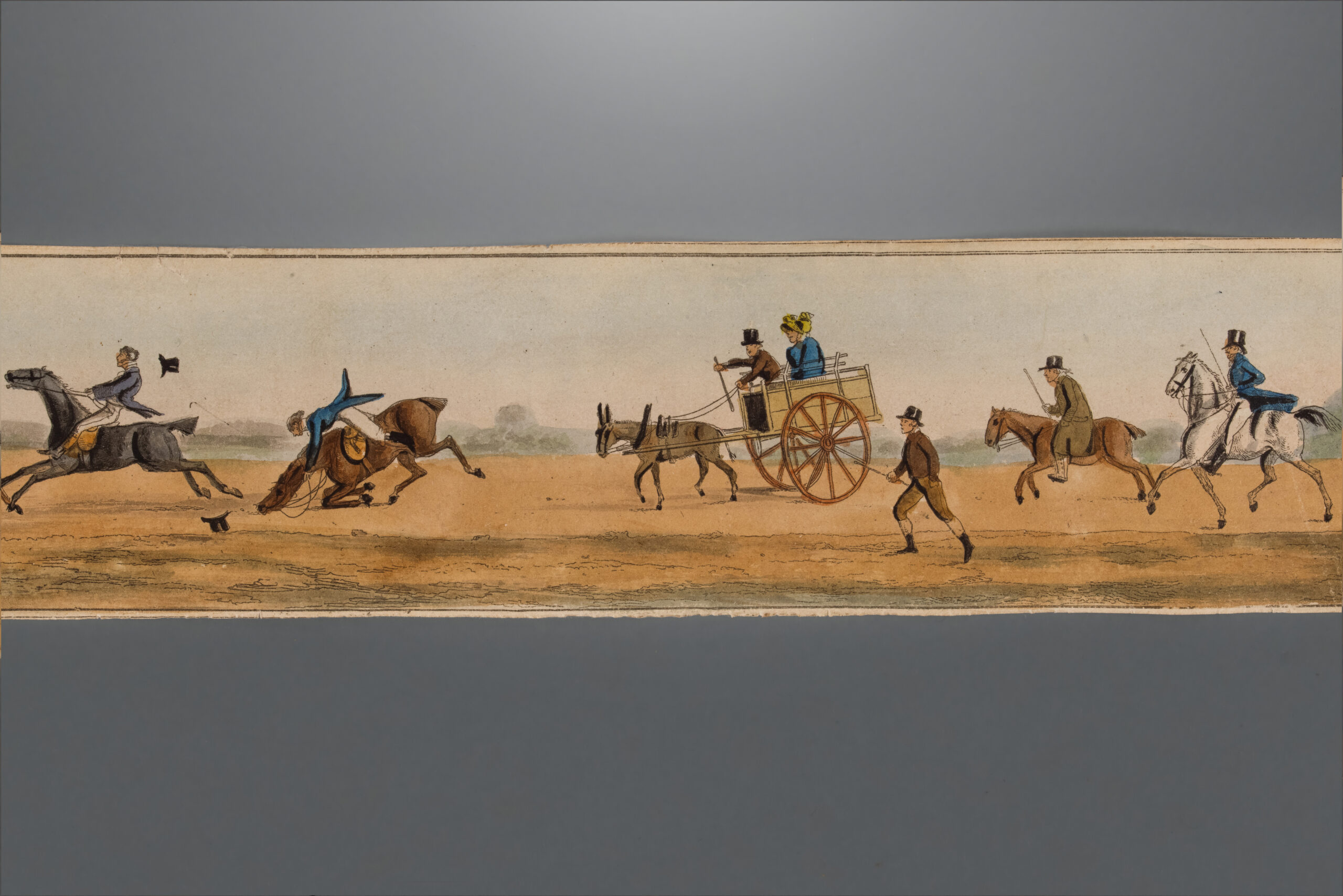
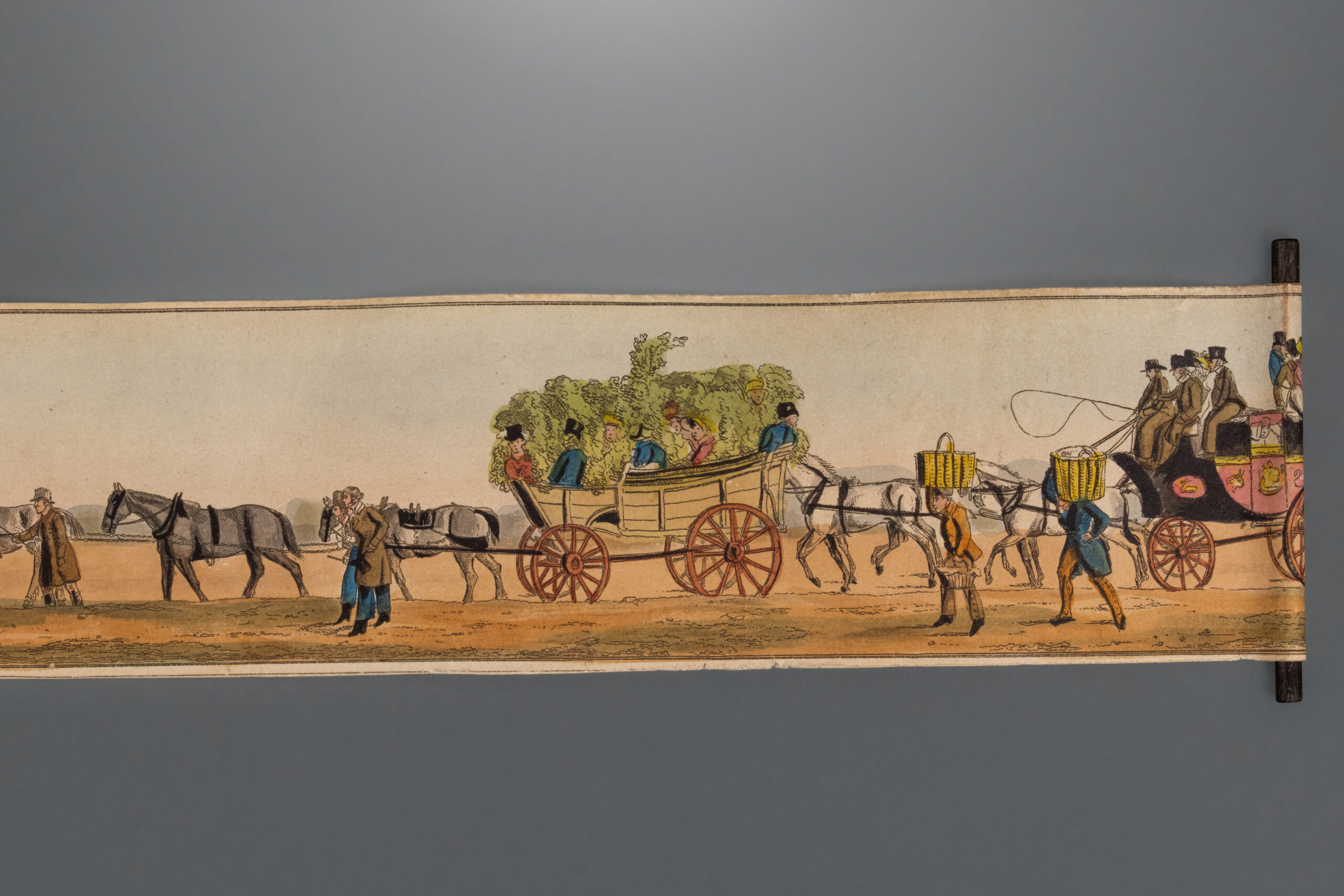
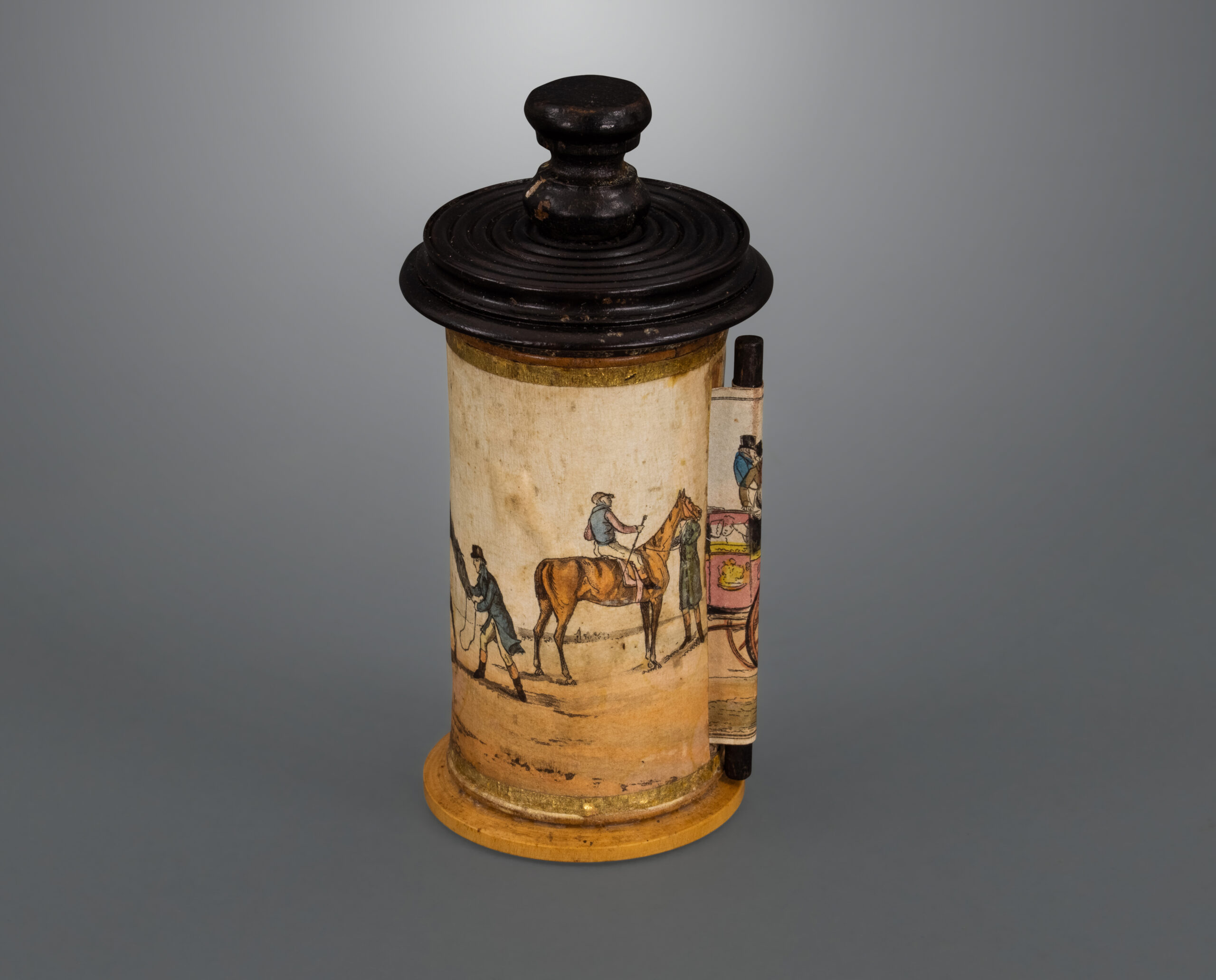
A fine and very rare first impression of one of the most famous of all panoramic prints, this nearly 13 ft long composition is the work of the leading equestrian artist Henry Alken and is a first impression dating from 1819, contained in its original boxwood cylinder roller as issued and with hand applied gilding across the piece and an applied tab for viewing. Surviving impressions in their original rollers are very rare indeed, especially in such fine condition as the present piece. The print depicts the journeys of a series of spectators and horse owners from London to Epsom for race day, some arriving in grand carriages, others on foot or transported in the back of wagons and other more ludicrous forms of transportation.
The full title of the work is Going to Epsom Races. A Ludicrous Amusement Consisting of Modern Costume, Characters, Dandies, Equipages and Horsemanship and the print was made available by Alken’s publishers in several versions, both mounted on a roller and for mounting on a wall. An advert placed by the publisher S and J Fuller of 34 Rathbone Place in London in the Morning Chronicle on the 10th of July 1819 reads as follows:
‘GOING TO EPSOM RACES
Fifteen feet long, price 15s. Coloured, 10s. 6d. Plain, in cases, Going to Epsom Races: a new and ingenious article of amusement, consisting of many hundreds of moving figures, and giving at one view the complete character, costume, equipage, horsemanship, and the principal amusement of the English people. Published by S. and J. Fuller, 34, Rathbone-place; and may be had of all the booksellers and toymen in the United Kingdom’
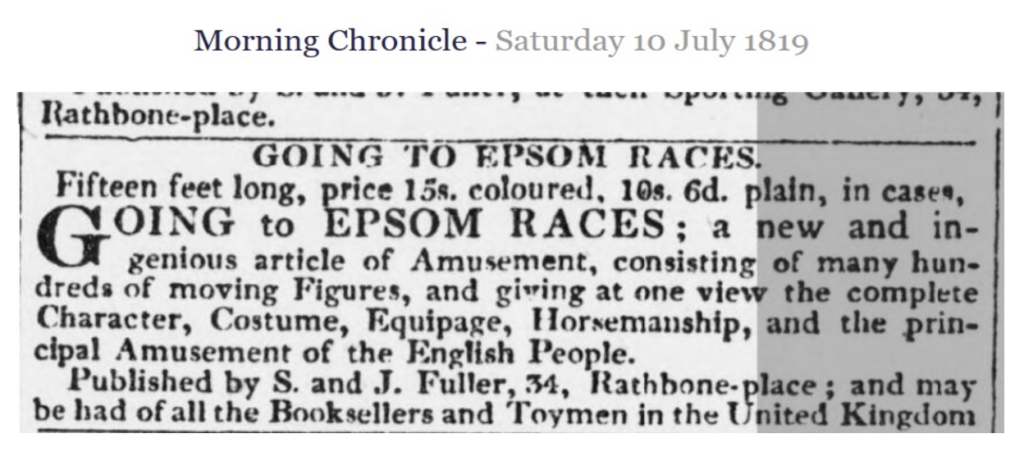
Another advert placed by the publisher S. and J. Fuller in the same year for their bizarre “Grimacer” contraption which allowed the facial features of a series of printed plates to be manipulated for the amusement of the family on dark nights at home also mentions that the Going to Epsom panorama is available and this demonstrates that the likely original market for this panorama was for family entertainment and not for the print collectors of the period. As is so often the case with printed material, it is the collectors’ pieces which have survived in far greater numbers than those designed for heavy use, the so-called “popular prints”, and museums and collectors of the present period are therefore frequently interested in collecting these now rare examples of printed ephemera. The popularity of the present piece is aptly demonstrated by the fact that it was still in production in 1822.
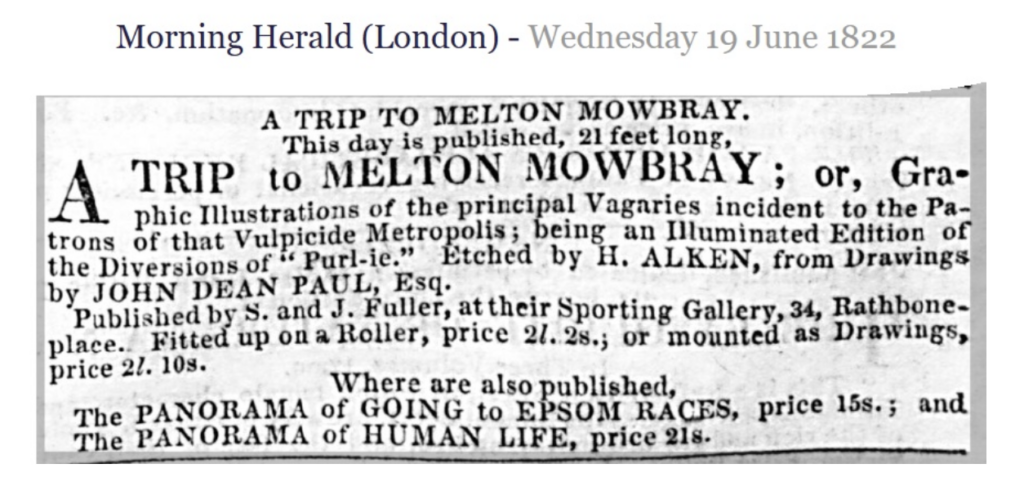
By this time other panoramas designed by Alken had also been added to the firm’s stock.
The 1819 advert makes clear that this piece was available both is stock uncoloured form and as a hand coloured edition for a large upcharge. Comparison of our example with another first impression of the scene shows identical hand colouring across the two pieces. This is highly unusual-usually hand colouring was somewhat hit and miss and handled by a number of different workshops, leading to quite striking differences in quality between surviving impressions. There was artistic licence given to the those applying the colour, meaning that for example a carriage might be blue in one impression and coloured in yellow in another. The comparison of the two impressions of the present composition suggests that Fuller kept close control of the colouring process, ensuring a much more consistent outcome for their customers. As the adverts state, the panorama was available from toymen and booksellers around the UK and so this additional quality control would have been very useful.
The Subject Matter of the Piece:
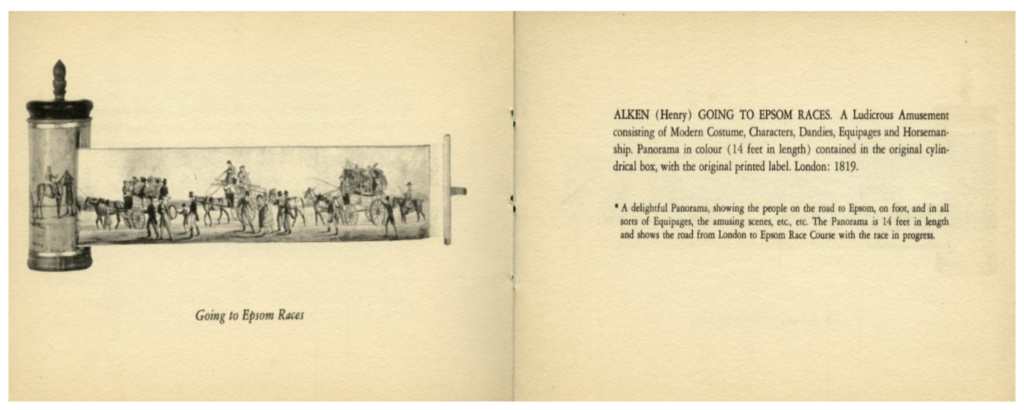
In his catalogue of the sporting panoramas in the collection of the late Alfred Barmore Maclay, Ernest R. Gee wrote of the present composition:
‘A delightful panorama, showing the people on the road to Epsom, on foot, and in all sorts of equipages, the amusing scenes etc., etc. The panorama is 14 feet in length and shows the road from London to Epsom Race Course with the race in progress’.
Published in July of 1819, the present print could in theory relate to one of two of the five classics of horse racing, both held at Epsom and run in that year. They are the Oaks, held in May, and the oldest of all the classics, the Derby, run on the 3rd of June that year. Although there is no doubt that Alken’s work here is highly caricatured and somewhat satirical, it must have been based on the Derby. We know this because, in 1840, Alken produced a second panorama reusing many of the 1819 plates. This later piece was titled Epsom Races-the Derby Day. The real Derby of 1819 was won by the Duke of Portland’s colt, Tiresias. A newspaper report of the time describes Tiresias leading from start to finish of the race, eventually winning by about a head. According to the Chester Chronicle, 4th of June 1819, ‘The judge, as well as several other old sporting gentlemen, allowed this to be the best race for the Derby ever ran (sic)’.
Many newspaper reports of the latter part of June and in to July refer to problems with gambling defaulters in this year. Tiresias was not one of the favourites for the race and so many gamblers lost large amounts of money on the race. The custom of the time required all gamblers to return to Epsom at a later date and enter the race room where they would make payment for their losses or leave with their winnings. On this occasion many men simply did not return to pay their debts, causing great consternation.
Set against this background, it is perhaps no wonder that Alken was approached to produce a panorama on this subject in this particular year.
As can be seen from the partial list of references above, impressions of this rare print have been in some extremely important collections over the years and been the subject of entries in academic catalogues. The British Museum has probably the best surviving collection of panoramic or rolled prints of any institution but they do not have an impression of this particular composition. The composition was mentioned by Gabriel-René Mennessier de La Lance in his Essai de bibliographie hippique : donnant la description détaillée des ouvrages publiés ou traduits en latin et en français sur le cheval et la cavalerie, avec de nombreuses biographies d’auteurs hippiques / par le général Mennessier de La Lance, the work being an attempt to create a bibliography relating to horses and horsemanship, further evidence of its wider interest.
Alken’s work combines the humour of Rowlandson with some accurate representations of horses and riders which make this print appealing to both the equestrian connoisseur and the lover of 19th century decorative arts. Therefore it is perhaps unsurprising that an impression of the print, in a private collection, should be featured in an article in Middleburg Life & Hunt Country magazine titled Then & There: Scenic Views & Sporting Life which may be read online here: https://www.middleburglife.com/scenic-views-sporting-life/
(Ernest R. Gee’s catalogue entry for the present composition from his work titled Sporting Panoramas)


