
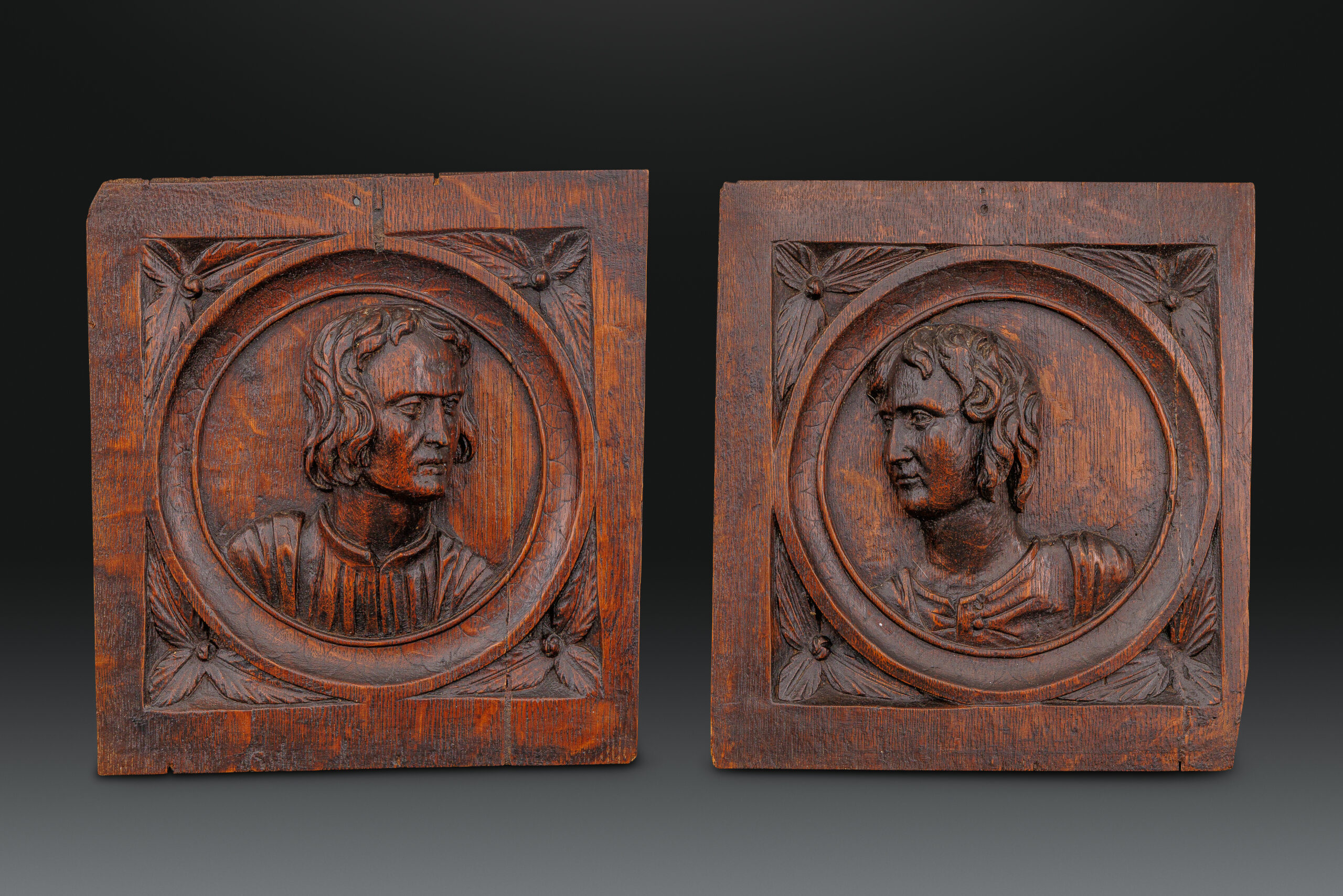
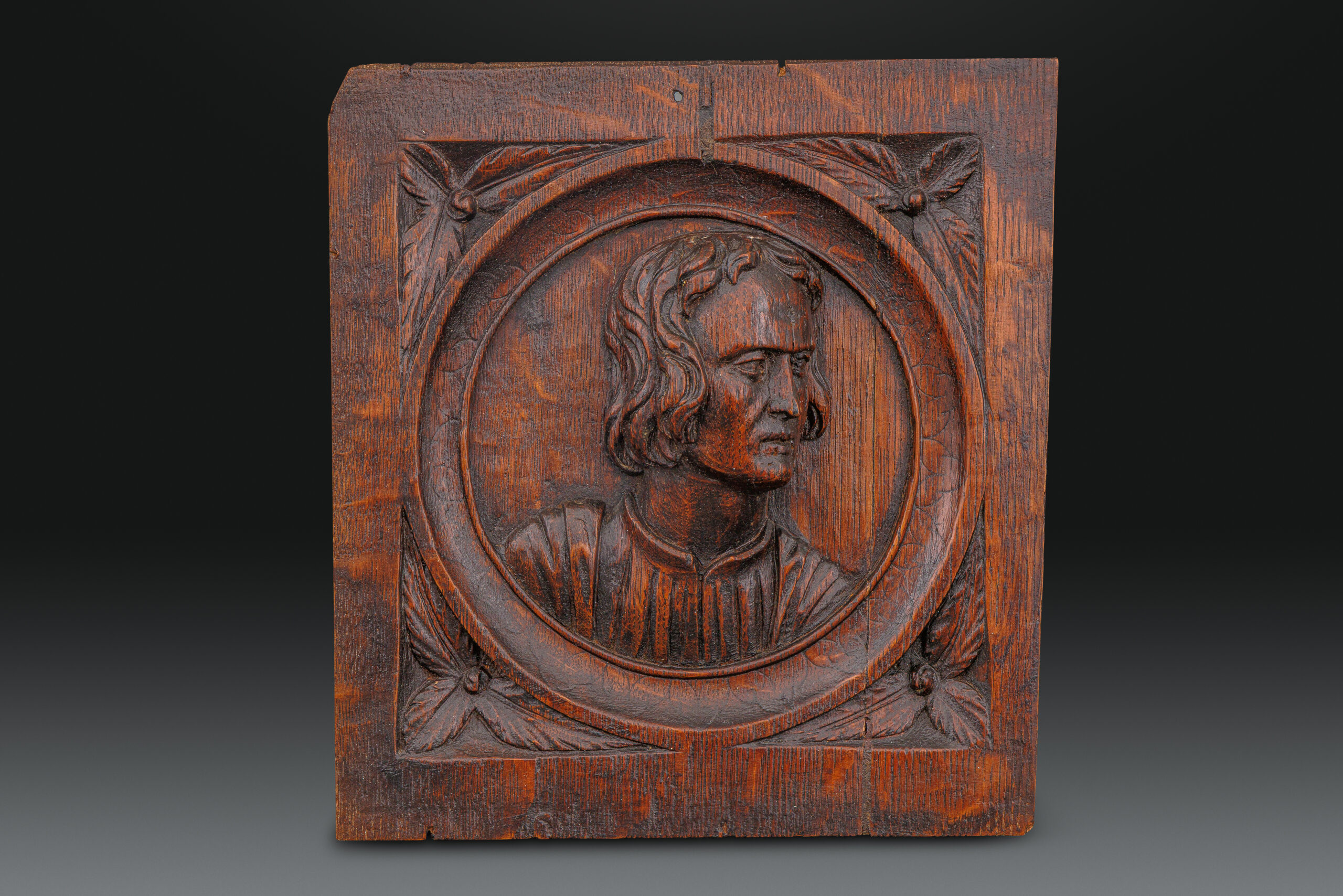
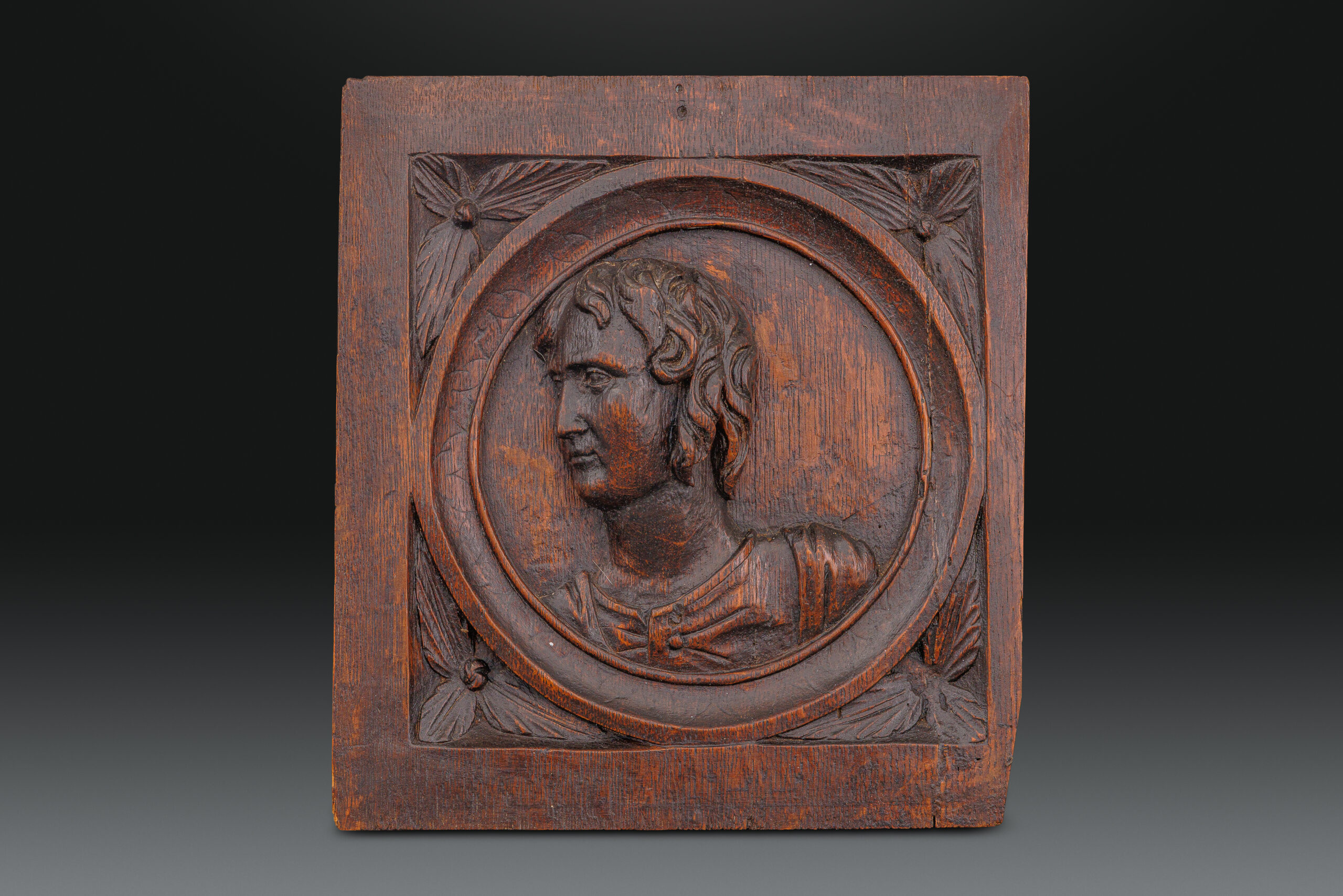

These are fine square panels of exceptional color and patination, centered with roundel frames encircling male busts. The corner spandrels filled with leaf and berry carving. The carving of the busts is in extremely high relief and undoubtedly based on contemporary published sources, most likely engravings or woodcuts. The features of the two make figures are so confidently carved and represented that they can only have been taken from a source of equal quality. These are not invented figures as is often the case with lesser quality pieces from this period which repeat simple allegorical bust designs without any truly defining features.
It has not been possible at this stage to identify the two figures portrayed in these panels. One, the figure in profile to left, seems likely to be a classical figure, depicted in some sort of toga, whilst the other, in profile to right, seems likely to be a thinker or literary figure, depicted in open robes which are similar to those worn by doctors and academics of the period. The fact that both figures are depicted bare headed makes it unlikely, although not impossible, that they are intended to depict royal or noble figures.
The quality of the carving in these pieces is quite superb. Note for example the lightly carved strapwork or floral detailing on the frames surrounding the figures, and contrast this with the deep carving of the rebates of the frames themselves. Many surviving carvings from this period are naive-charming in their simplicity but not great works of art. These carvings, however, are very definitely the products of a highly experienced workshop of the highest calibre. Indeed the quality of the central carving is reminiscent of the panel in V&A believed to have been made for Winchester House in London (https://collections.vam.ac.uk/item/O77431/panel/).
Just as with the V&A panel, the quality of carving of our pieces may suggest a foreign craftsman working in England as the sophistication of both the design and execution of the panels is unusually high for a native craftsman of the time.
England, c. 1540.


