
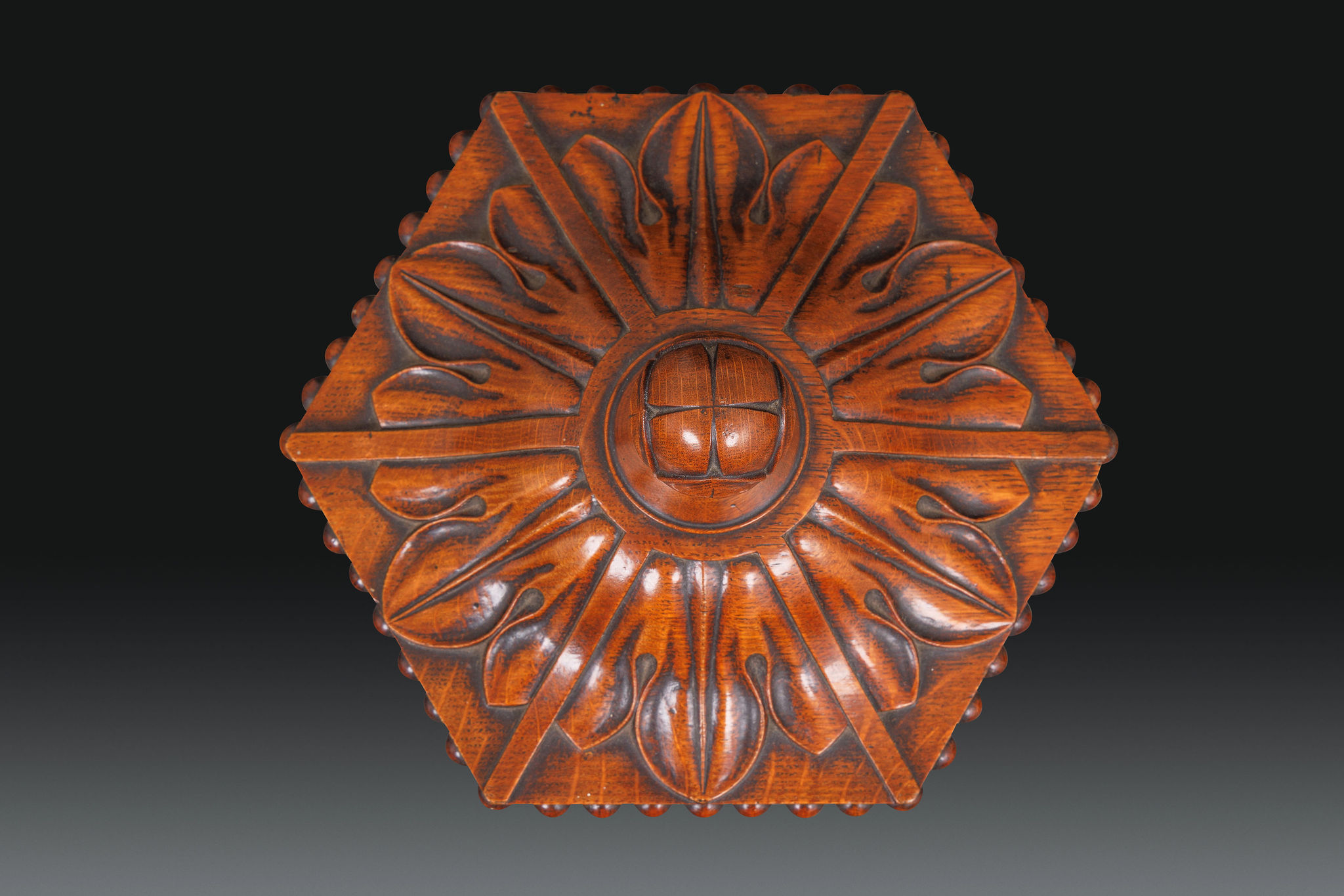

Provenance
Miss Pearce-Higgins in Tangier “who brought it from England”. Almost Certainly Ann Pearce-Higgins of Dar Ziaten
R. Timewell, previously head of English furniture and a senior director at Sotheby’s until his retirement in 1967, Villa Leon L’Africain, Tangier, purchased from the above in 1974
Possibly sold with the house to the English antiques dealer Christopher Gibbs
Mallett Antiques
An important private collection
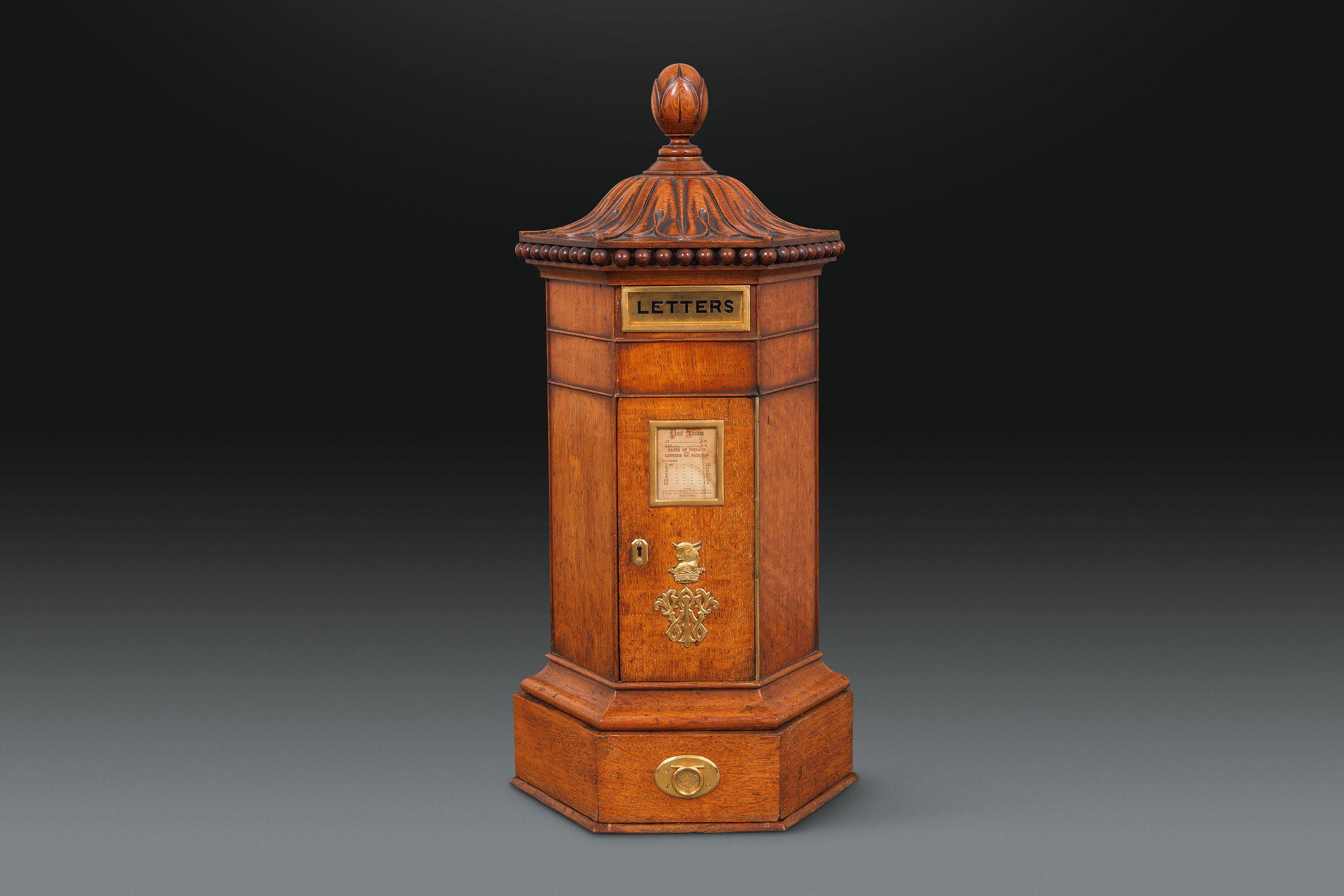
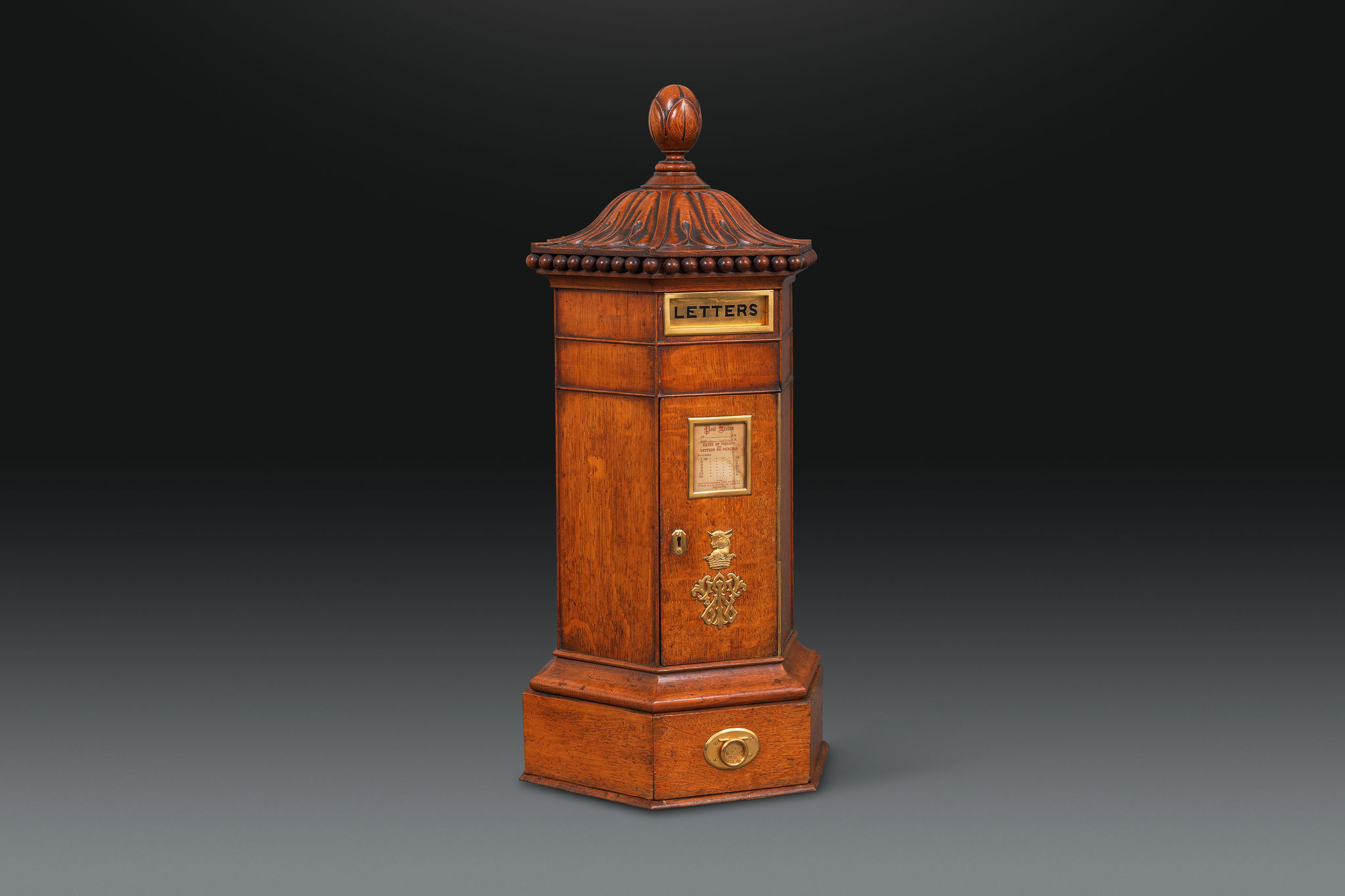
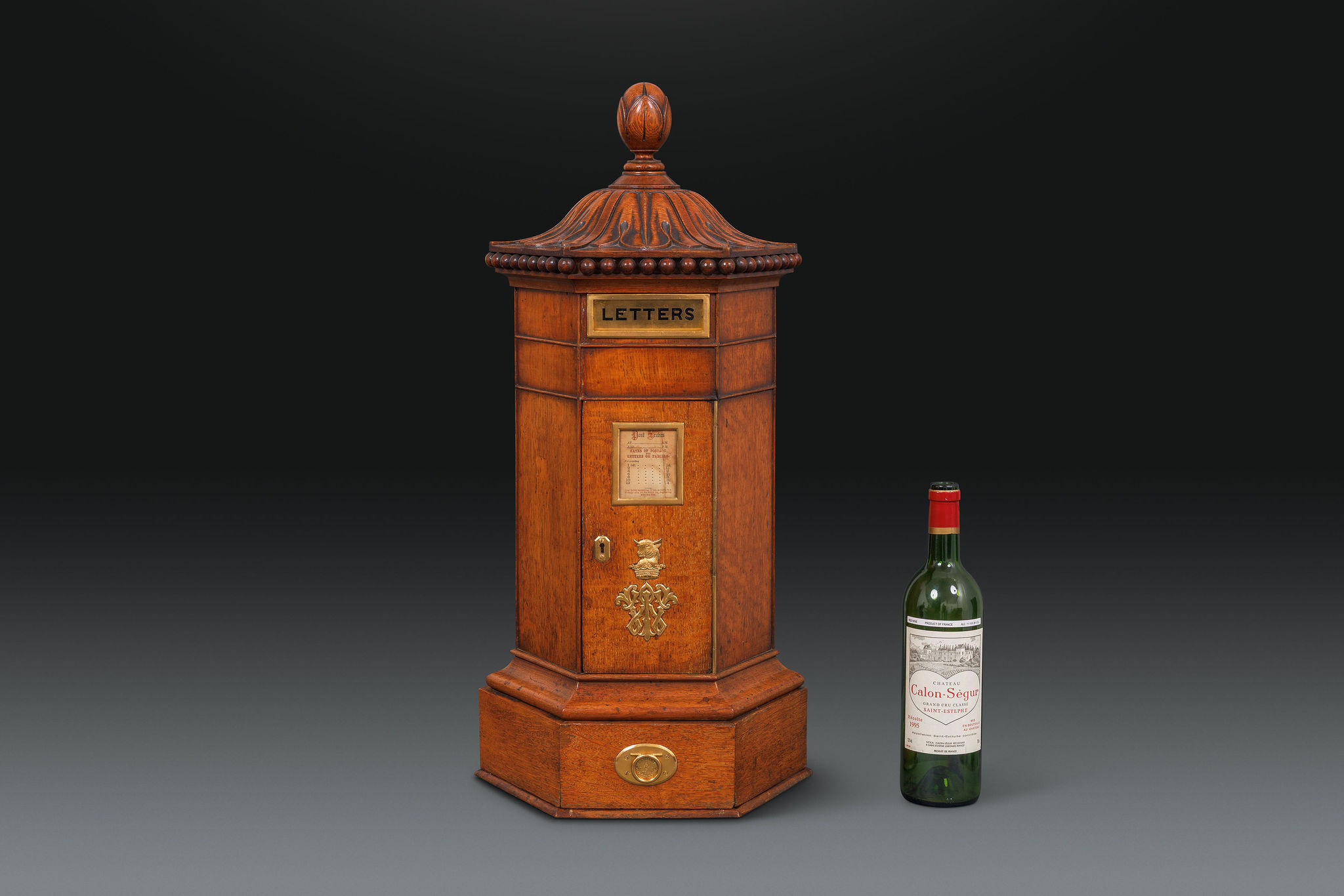
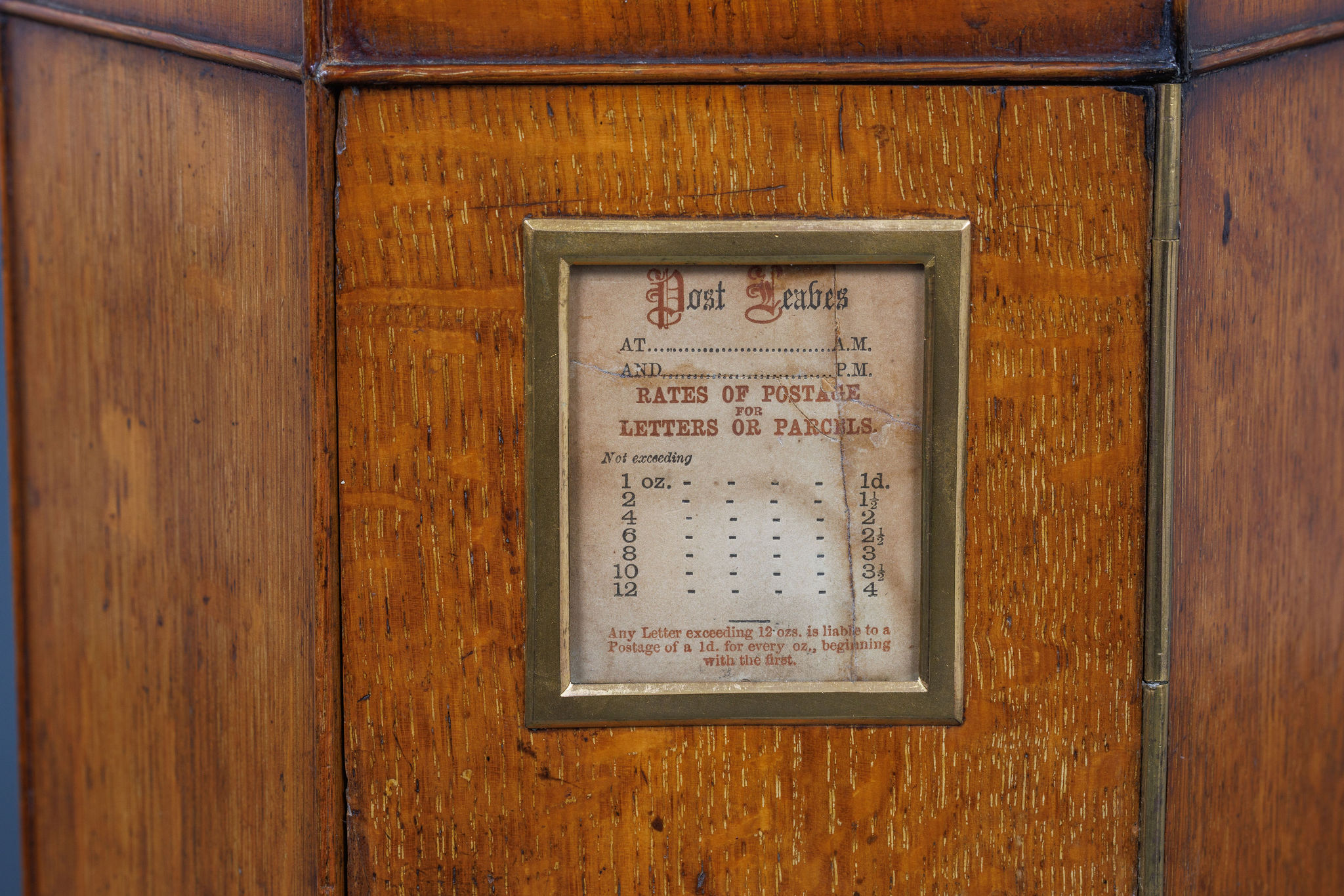
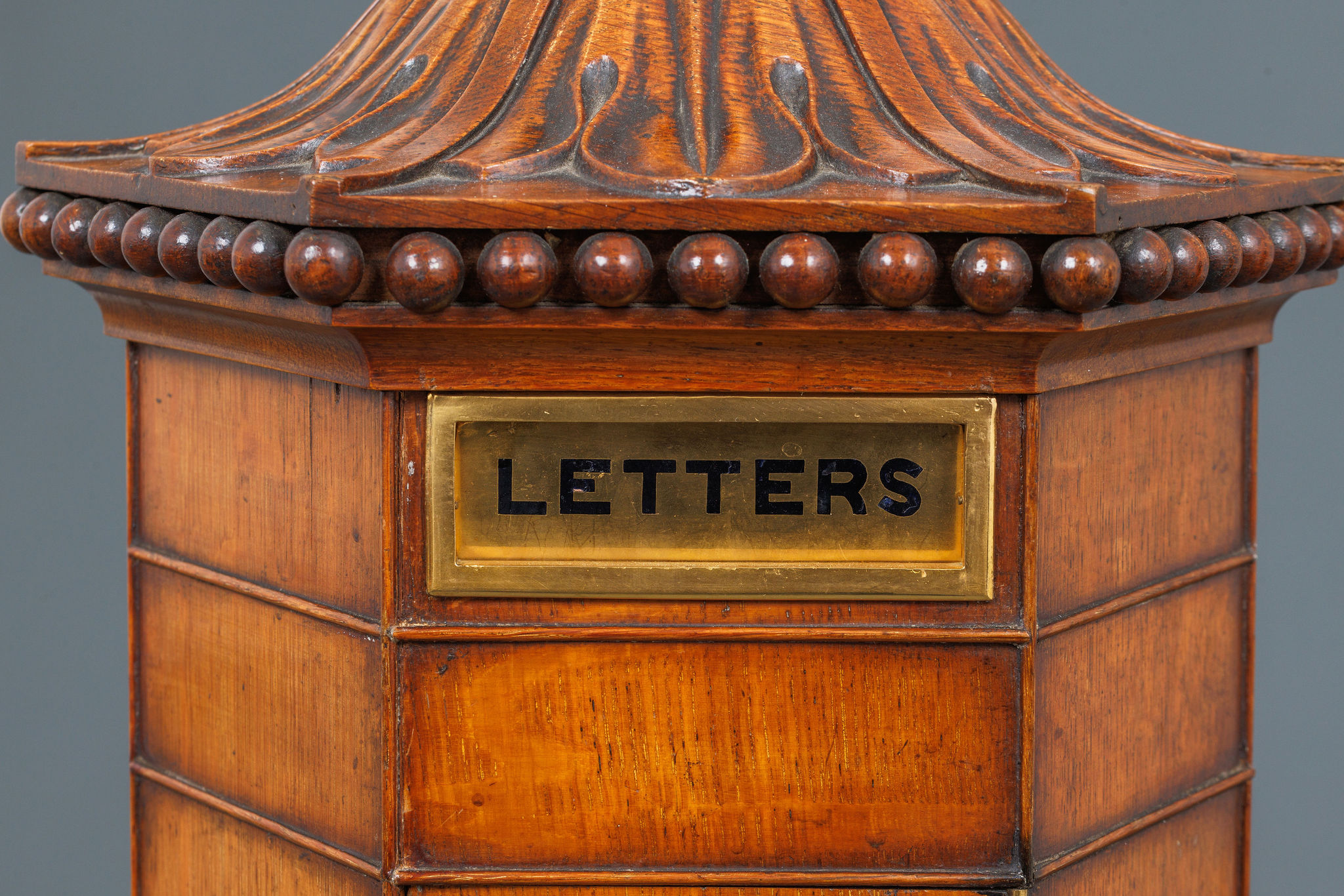
This fine piece was designed to be used in the hallway or foyer of a country house or club for collecting letters which would then be taken to a public post box by a servant or member of staff. Such country house post boxes survive in some quantity but very few examples of this scale exist. The design of the piece is taken from the cast iron Royal Mail originals designed by the architect J. W. Penfold in 1866. These Penfold boxes were then made, in a number of different variations, until 1879 but fewer than 92 of these full size post boxes are now believed to survive and fewer than 20 of the original 1866 design. Of the 1866 survivors, 8 are in Cheltenham and another group is clustered around Kensington in London with isolated survivors in other places such as Cambridge. The design is now considered so important that all surviving examples have been designated grade II listed buildings for heritage preservation purposes. The design is regarded as a 19h century classic and, as such, country house boxes of this design are eagerly sought-after by collectors not only of decorative arts but also of postal history and stamps.
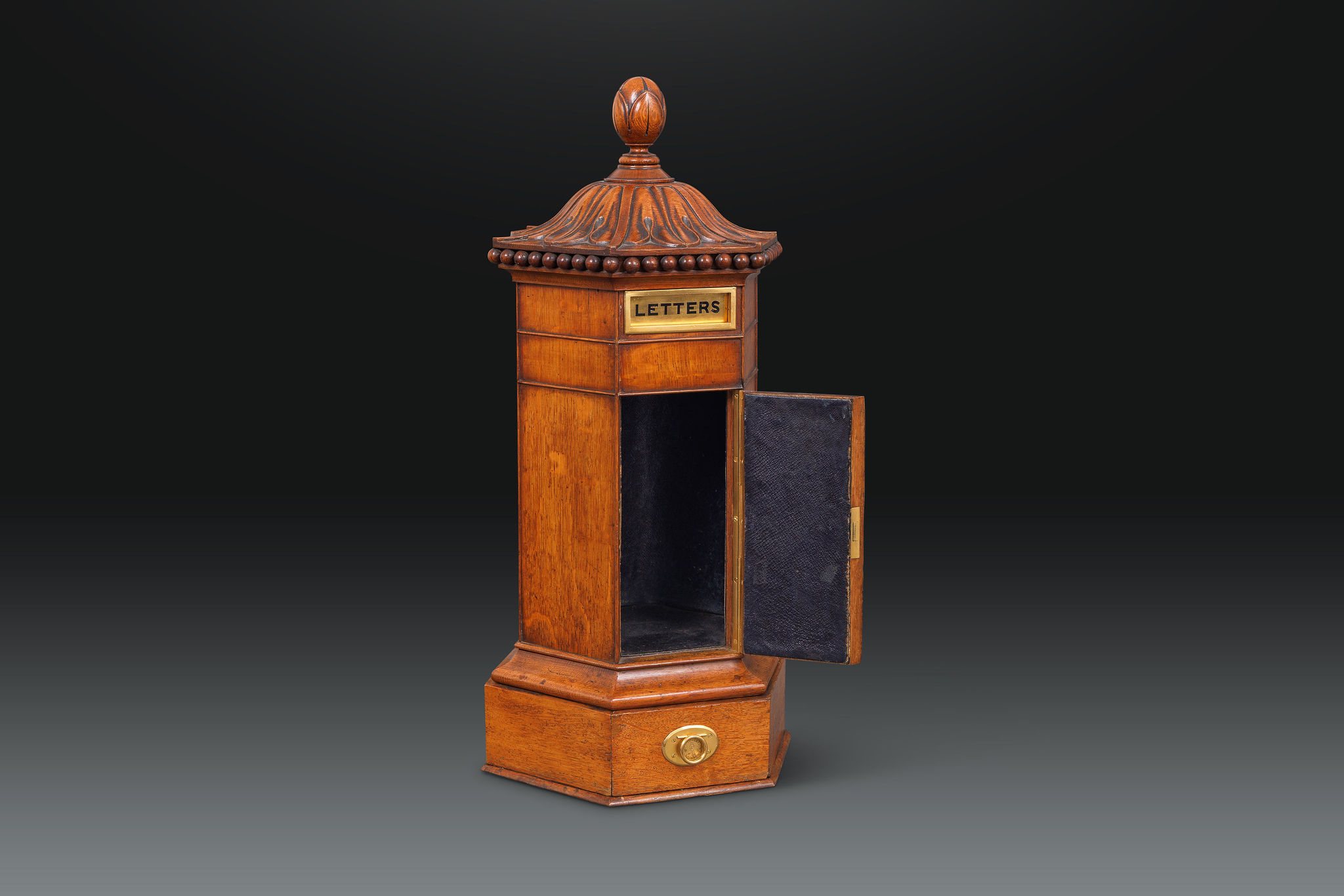
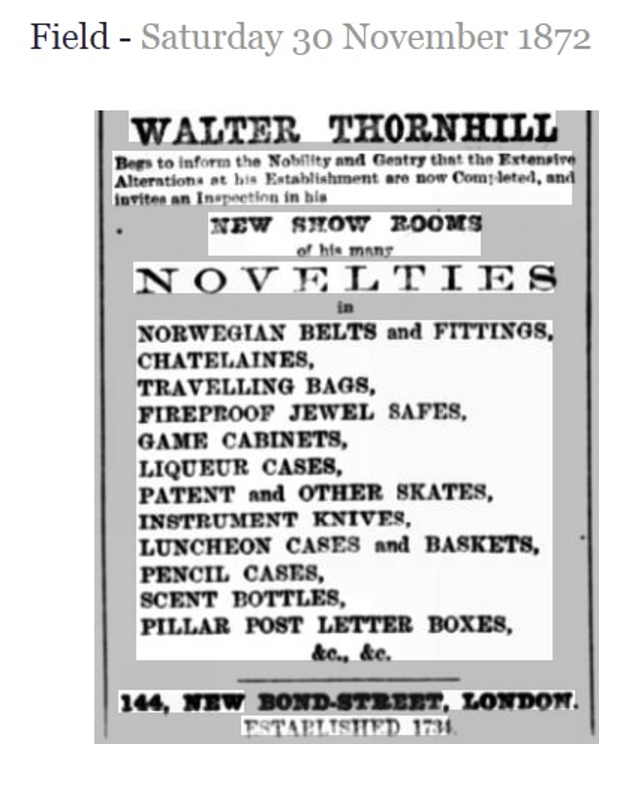
Our piece is certain to have been retailed by the great Walter Thornhill and Co of 144 New Bond Street as is shown by the initials W T either side of the registered design mark on a brass plaque on the drawer, concealed by the handle. Other examples of these boxes, either inscribed Thornhill or W T on the handle plate, survive and the earliest known Thornhill example dates to 1871. The registration number on our piece and other examples show that Thornhill offered this design for a number of years, including after the Penfold boxes for Royal Mail had been superseded by the more familiar round model seen all over Britain today. It was obviously a classic as far as the firm was concerned and yet what is very interesting is that each Thornhill piece seems to have been individually engraved with a serial, not model, number and these suggest that only a relatively small number, in the three figures, of these pieces were ever made. This is perhaps not surprising when one looks at the luxurious construction of these pieces. Apart from the high quality carving and the large proportions, the pieces are brass mounted and are lined throughout in fine blue morocco leather, the lining of the present piece having survived in particularly fine condition. These post boxes were produced in a number of sizes, the present size being the largest that was available and therefore suitable for the grandest of homes and commercial premises. Our research in the newspaper archives has revealed that Thornhill began advertising their ‘Pillar post letter boxes’ in the papers in 1872. Illustrated below are two newspaper adverts from that year, one listing the sort of “novelties” that Thornhills sold, the other illustrating one of the boxes and describing its key features.
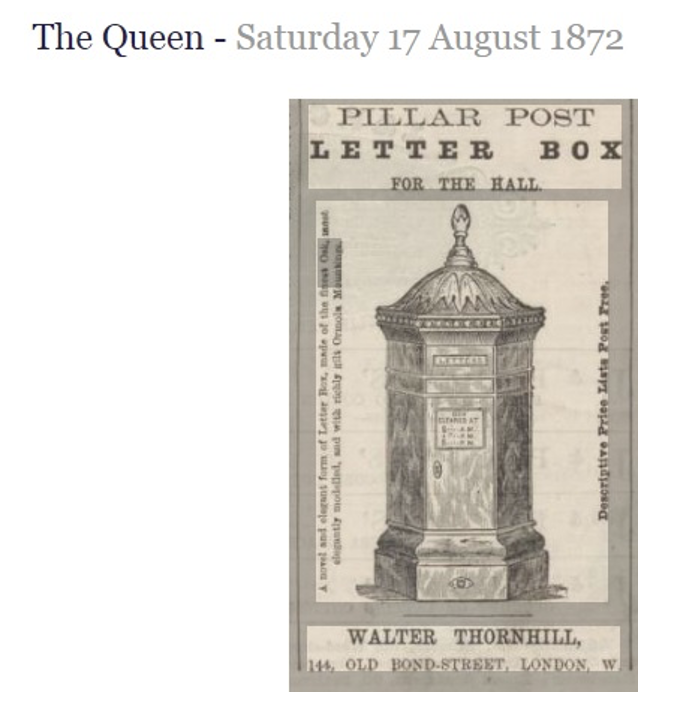
This fabulous advert states that the pieces are ‘a novel and elegant form of letter box, made of the finest oak, most elegantly modelled, and with richly gilt ormolu mountings’.
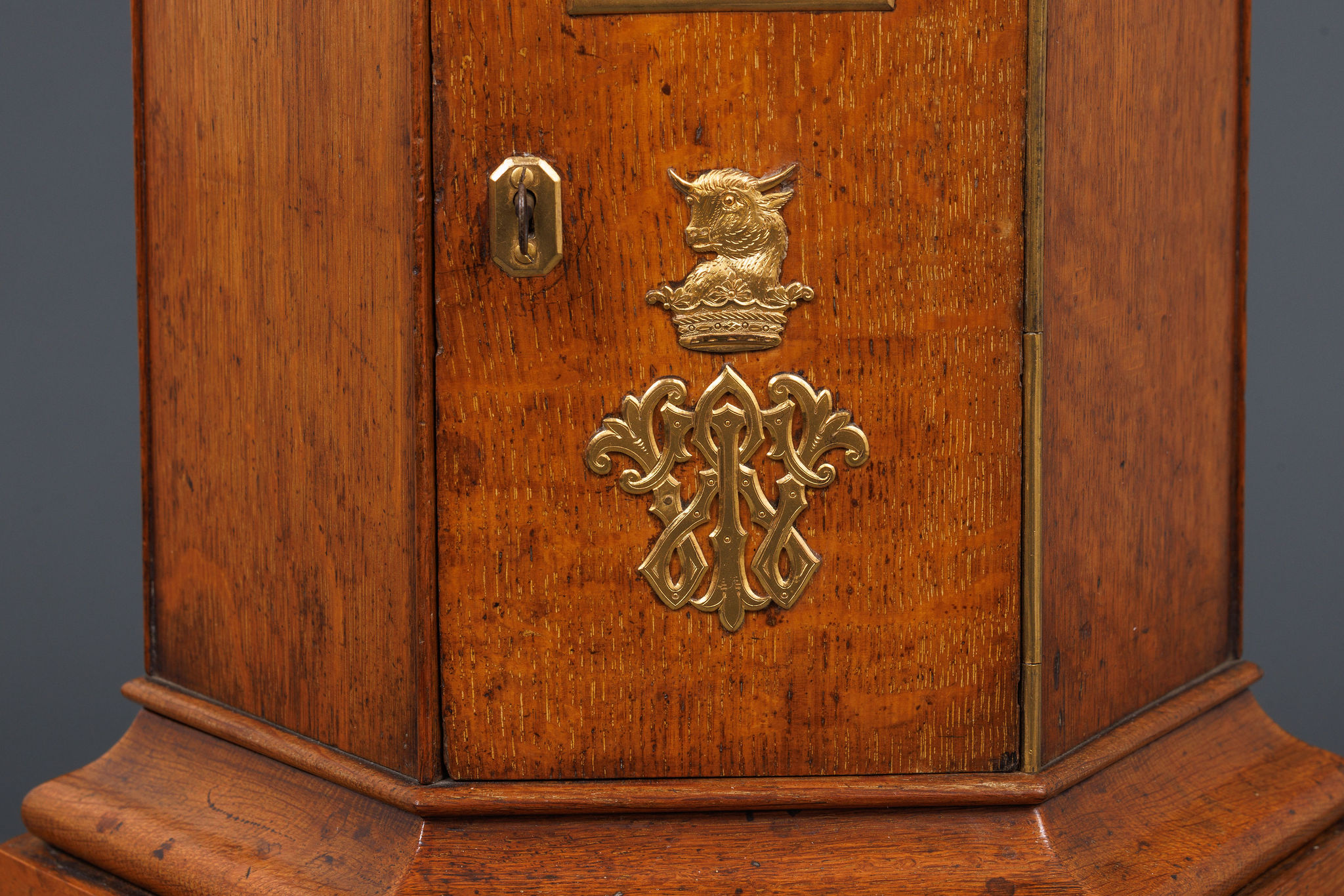
One feature that makes our box seemingly unique amongst surviving examples is that it is further mounted to the front with a crest which can be blazoned as Out Of A Ducal Coronet, A Bull’s Head, Armed Of The First. According to Fairbairn’s Book of Crests (4th edition) this crest could relate to one of around 50 families. However our piece is also mounted with a Victorian gothic monogram, consisting of the letters W T or T W. As can be seen from the illustrations from Fairbairn’s below, this means that the piece can in theory only have been made for a member of either the Tilson family of Ireland or the Wright family. It is also worth considering the possibility that as W T are also the initials of Walter Thornhill, perhaps this particularly fine piece was kept in the Thornhill shop as an example of the very best work that the firm could produce.
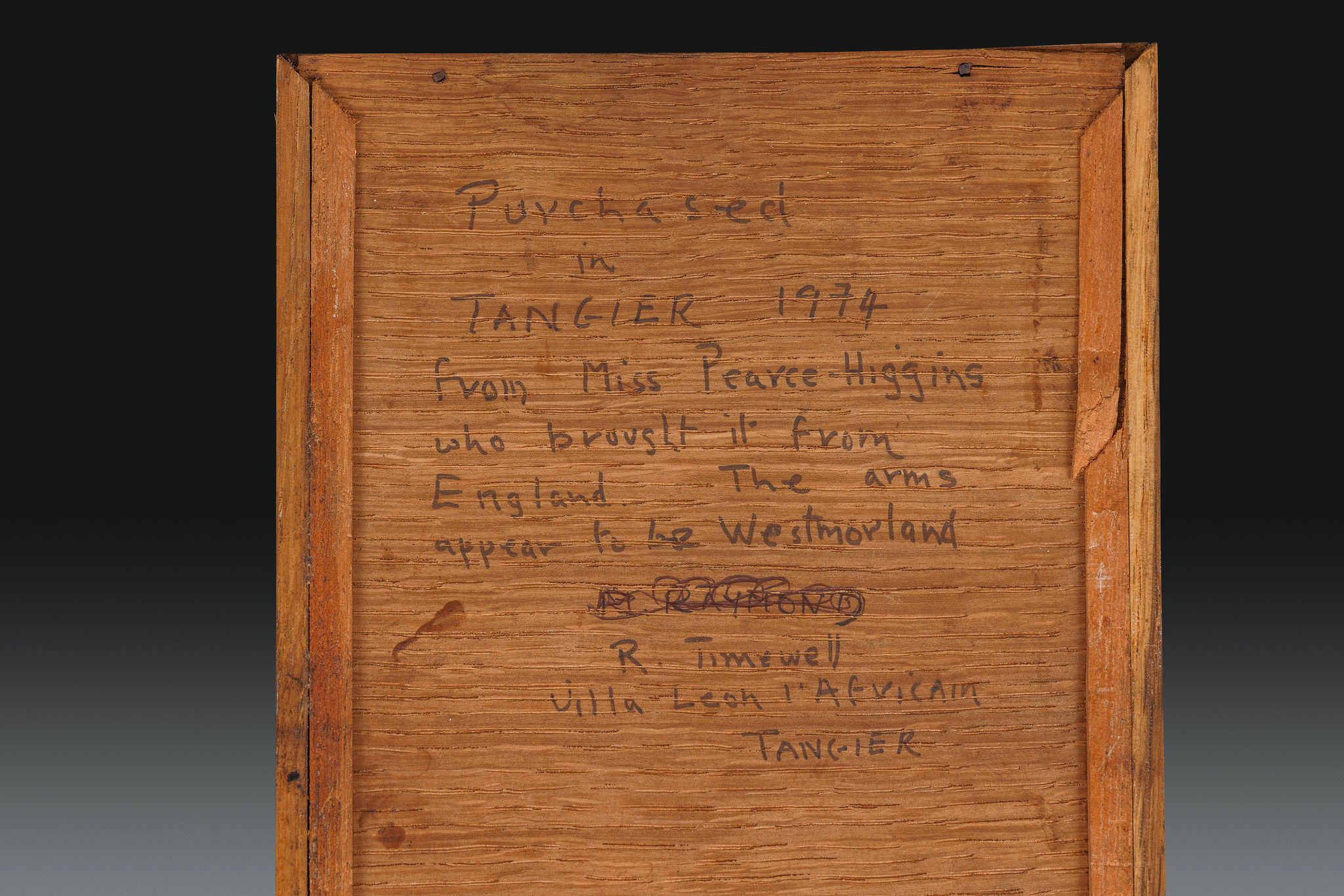
Inside the drawer of our piece is a long inscription which reads as follows:
‘Purchased in Tangier 1974 from Miss Pearce-Higgins who brought it from England. The arms appear to be Westmorland’
The inscription is then signed M Raymond (for Mickey Raymond, an ex-Colefax and Fowler decorator and friend of Timewell’s also living in Tangier), this is then crossed out and, in the same hand, the name R. Timewell and Villa Leon L’Africain. This adds some fascinating provenance to the piece but the crest is most certainly not that of the Earls of Westmorland. Their crest has a Tudor rose on the bull’s head which is clearly not present.
The Villa Leon L’Africain was built in 1912 and was then acquired by Timewell in 1974. He sold the villa to the great antiques dealer Christopher Gibbs in 1984. Gibbs was a legendary dealer at the heart of swinging sixties London and remained an important taste maker until his death in 2018. One can only imagine what this post box would have silently witnessed!
The “Miss Pearce-Higgins” mentioned in the inscription is almost certainly Ann Pearce-Higgins, the ‘life-long friend’, as she was described in the latter’s obituary in The Times in 1970, of the poetess Dallas Kenmare. Kenmare was, according to the same obituary, a devotee of Robert Browning and ‘was at her best in dramatic monologues of famous women lovers, such as Sappho and Heloise’. Kenmare and Pearce-Higgins lived together in Dar Ziaten, Tangier.
This is the perfect example of the best of the best in terms of objects de luxe produced in England in this period. Thornhills were purveyors of luxury goods to the very wealthiest and best connected aristocratic and noble families, including many royal families from around the world, and this piece illustrates the quality of craftsmanship that their workshops could produce for an important client.
Research and essay by Christopher Coles


